Plug valves
A Plug Valve is a quarter-turn rotational motion Valve that use a tapered or cylindrical plug to stop or start flow. In the open position, the plug-passage is in one line with the inlet and outlet ports of the Valve body. If the plug 90° is rotated from the open position, the solid part of the plug blocks the port and stops flow. Plug valves are similar to Ball valves in operation.
Types of Plug valves
Plug valves are available in a nonlubricated or lubricated design and with several styles of port openings. The port in the tapered plug is generally rectangular, but they are also available with round ports and diamond ports.
Plug valves are also available with cylindrical plugs. The cylindrical plugs ensure greater port openings equal to or larger than the pipe flow area.
Lubricated Plug valves are provided with a cavity in the middle along there axis. This cavity is closed at the bottom and fitted with a sealant-injection fitting at the top. The sealant is injected into the cavity, and a Check Valve below the injection fitting prevents the sealant from flowing in the reverse direction. The lubricant in effect becomes a structural part of the Valve, as it provides aflexible and renewable seat.
Nonlubricated Plug valves contain an elastomeric body liner or a sleeve, which is installed in the body cavity. The tapered and polished plug acts like a wedge and presses the sleeve against the body. Thus, the nonmetallic sleeve reduces the friction between the plug and the body.
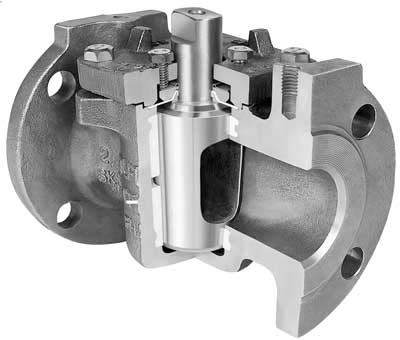
Plug valve Disk
Rectangular port plugs are the most common port shape. The rectangular port represents 70 to 100 percent of the internal pipe area.
Round port plugs have a round opening through the plug. If the port opening is the same size or larger than the inside diameter of the pipe, a full port is meant. If the opening is smaller than the inside diameter of the pipe, a standard round port is meant.
Diamond port plug has a diamond-shaped port through the plug and they are venturi restricted flow types. This design is suitable for throttling service.
Typical applications of Plug valves
A Plug Valve can be used in many different fluid services and they perform well in slurry applications. The following are some typical applications of Plug valves..
- Air, gaseous, and vapor services
- Natural gas piping systems
- Oil piping systems
- Vacuum to high-pressure applications
Advantages and Disadvantages of Plug valves
Advantages..
- Quick quarter turn on-off operation
- Minimal resistance to flow
- Smaller in size than most other valves
Disadvantages..
- Requires a large force to actuate, due to high friction.
- NPS 4 and larger valves requires the use of an actuator.
- Reduced port, due to tapered plug.
LARGE IMAGES OF VALVES
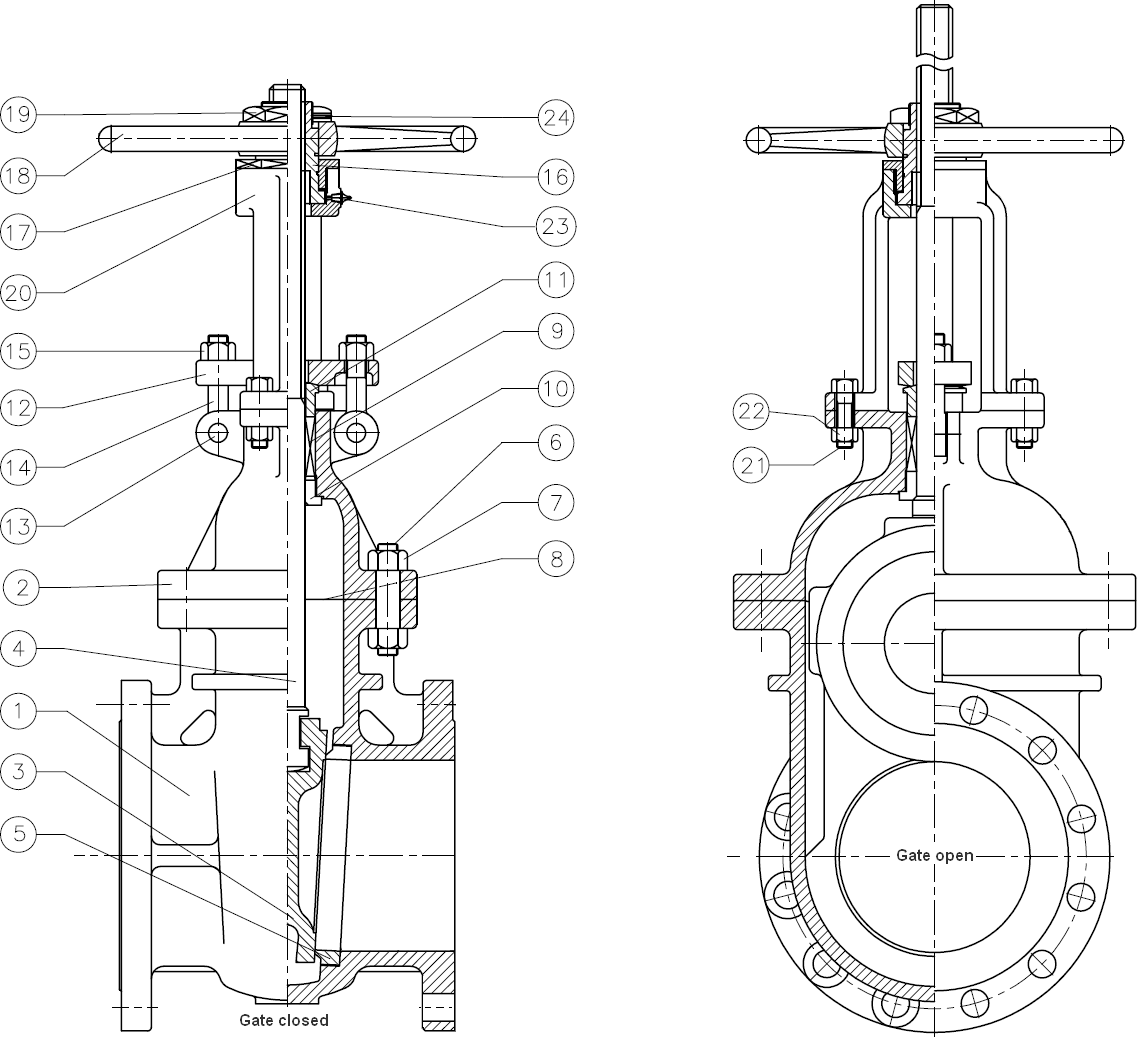
For a valve of the Rising Stem type, the stem will rise above the handwheel if the valve is opened. This happens, because the stem is threaded and mated with the bushing threads of a Yoke...
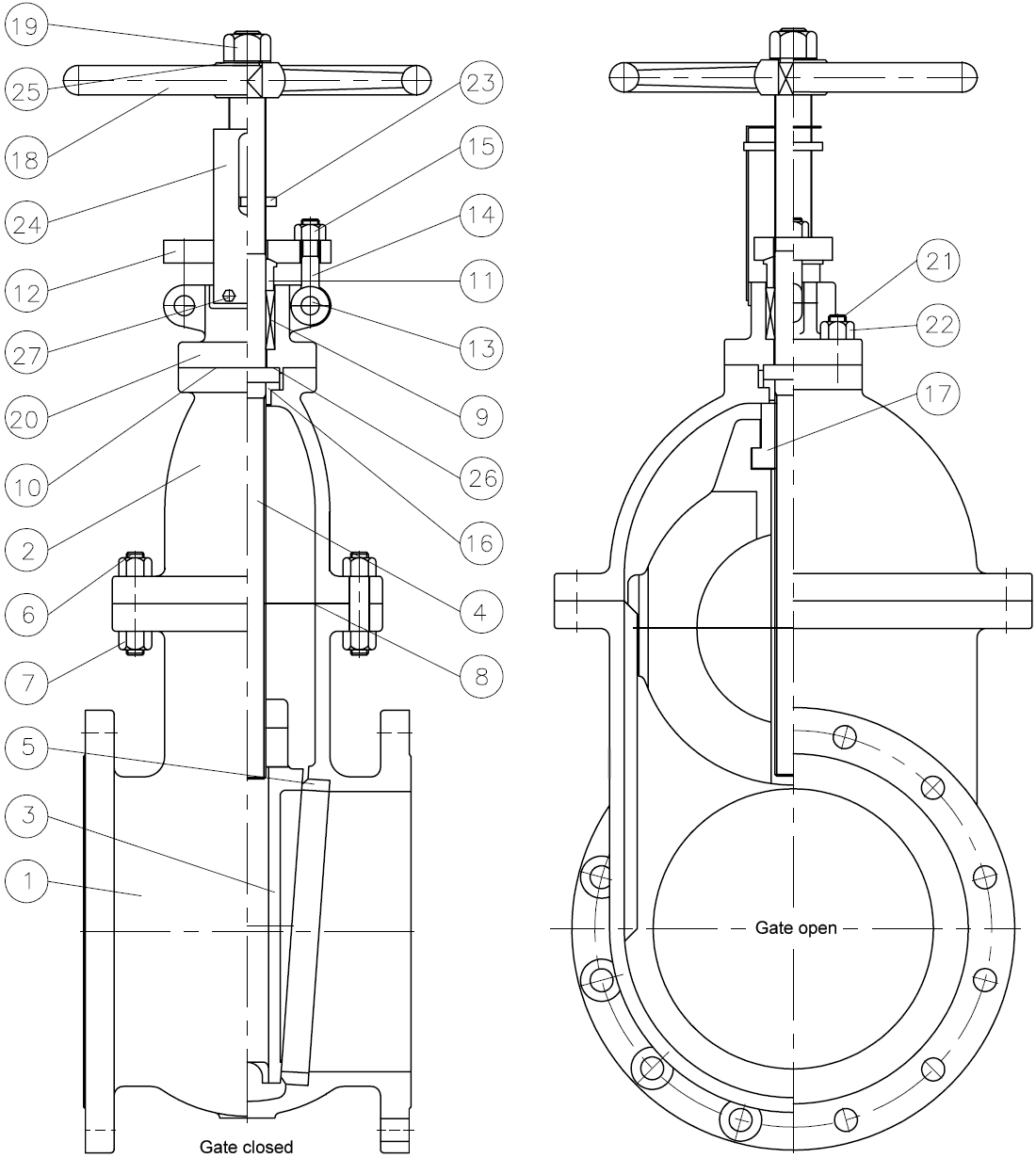
For a valve of the non Rising Stem type, there is no upward stem movement if the valve is opened. The stem is threaded into the disk. As the handwheel on the stem is rotated, the disk travels up or down...
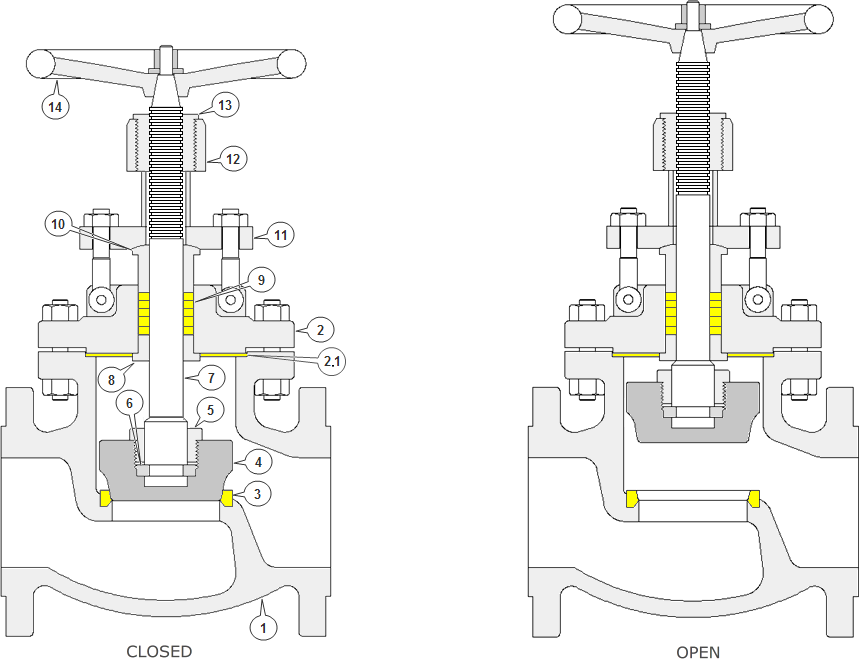
Globe valves usually have rising stems, and the larger sizes are of the outside screw-and-yoke construction. Components of the Globe valve are similar to those of the gate valve...
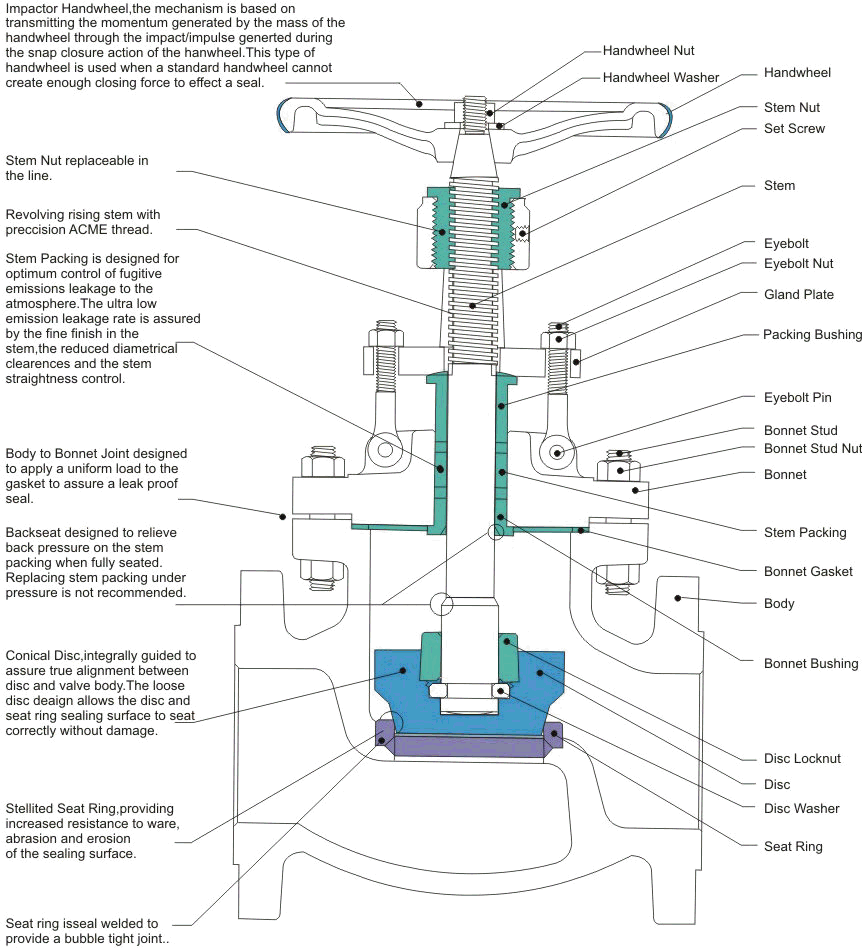
A Globe valve is a linear motion valve and are primarily designed to stop, start and regulate flow. The disk of a Globe valve can be totally removed from the flowpath or it can completely close the flowpath...
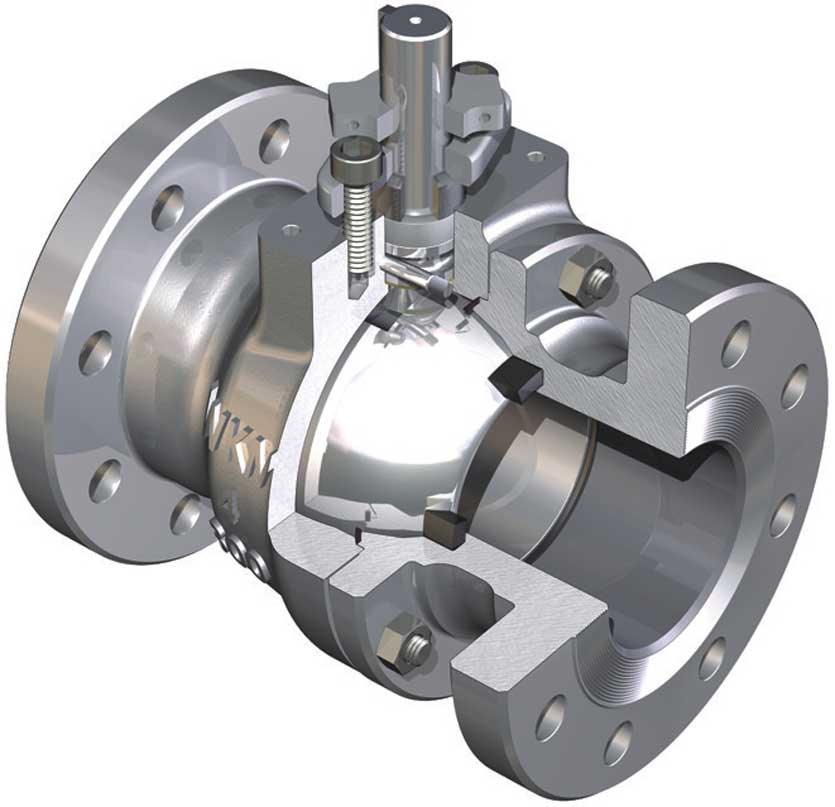
A Ball valve is a quarter-turn rotational motion valve that uses a ball-shaped disk to stop or start flow. If the valve is opened, the ball rotates to a point where the hole through the ball is in line with...
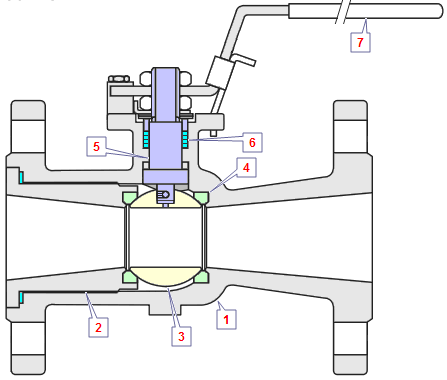
Ball valves are basically available in three versions.. full port, venturi port and reduced port. The full-port valve has an internal diameter equal to the inner diameter of the pipe...
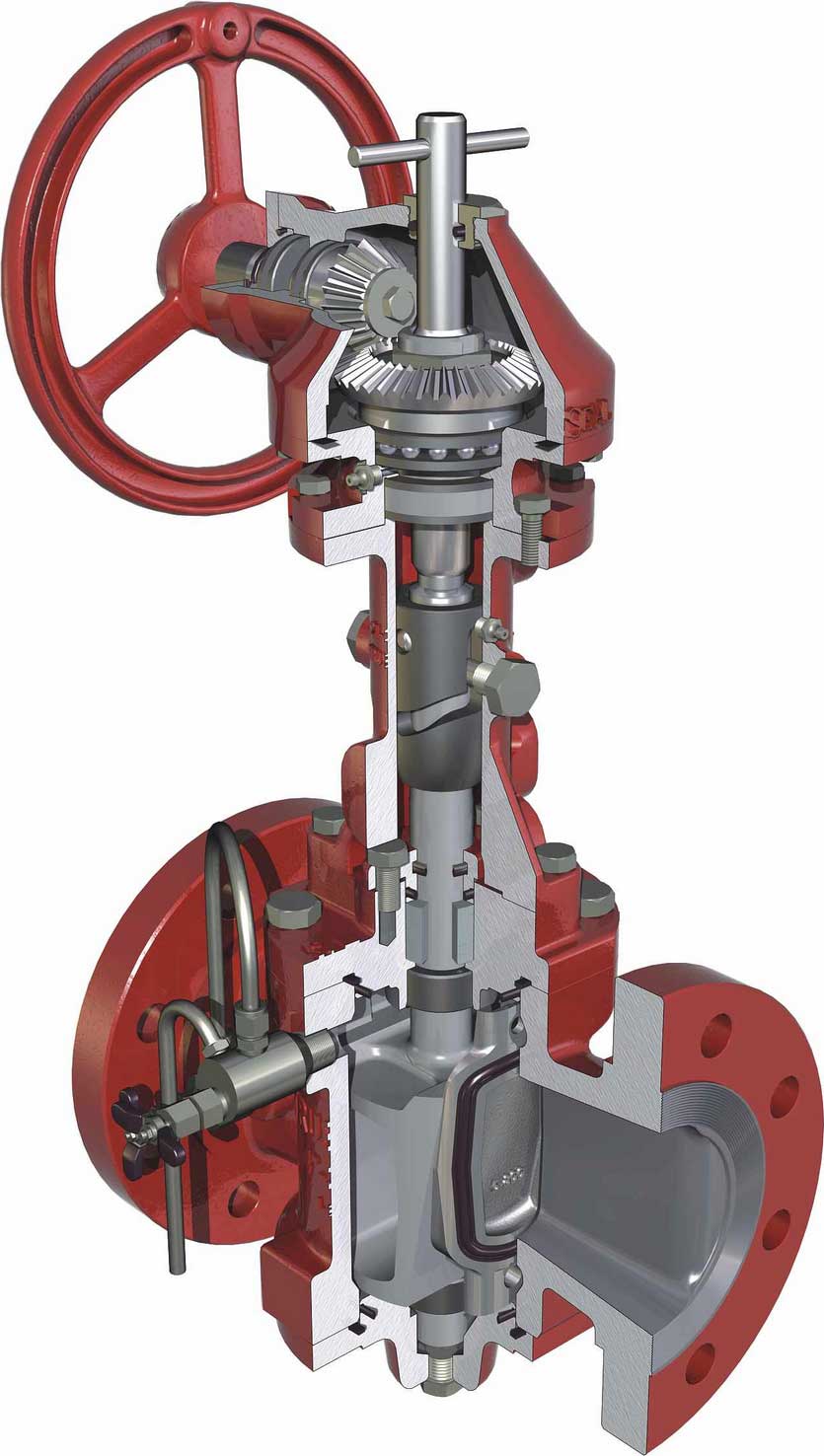
A Plug Valve is a quarter-turn rotational motion valve that use a tapered or cylindrical plug to stop or start flow. In the open position, the plug-passage is in one line with the inlet and outlet ports of the valve body...
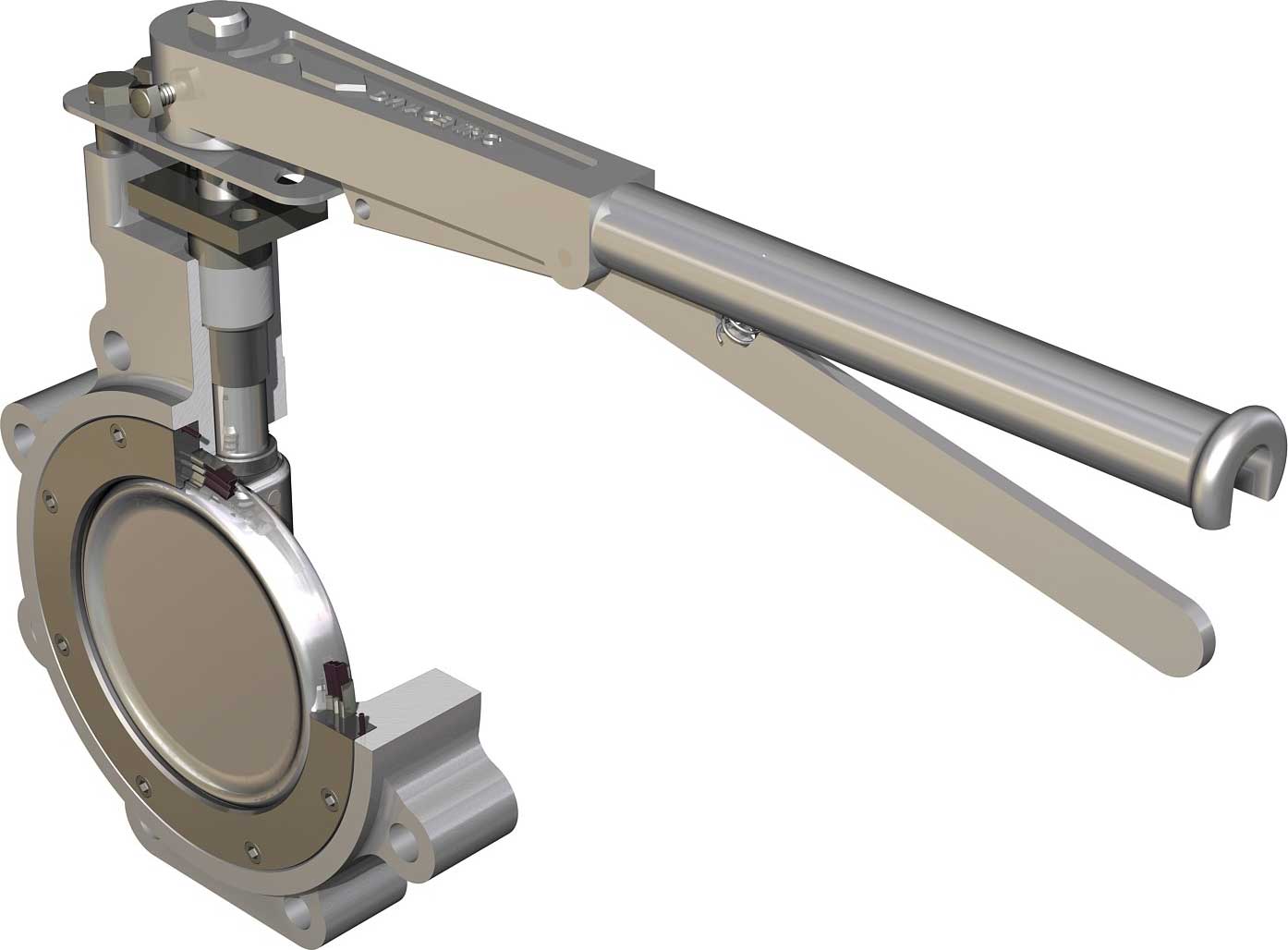
A Butterfly valve is a quarter-turn rotational motion valve, that is used to stop, regulate, and start flow, and are easy and fast to open...
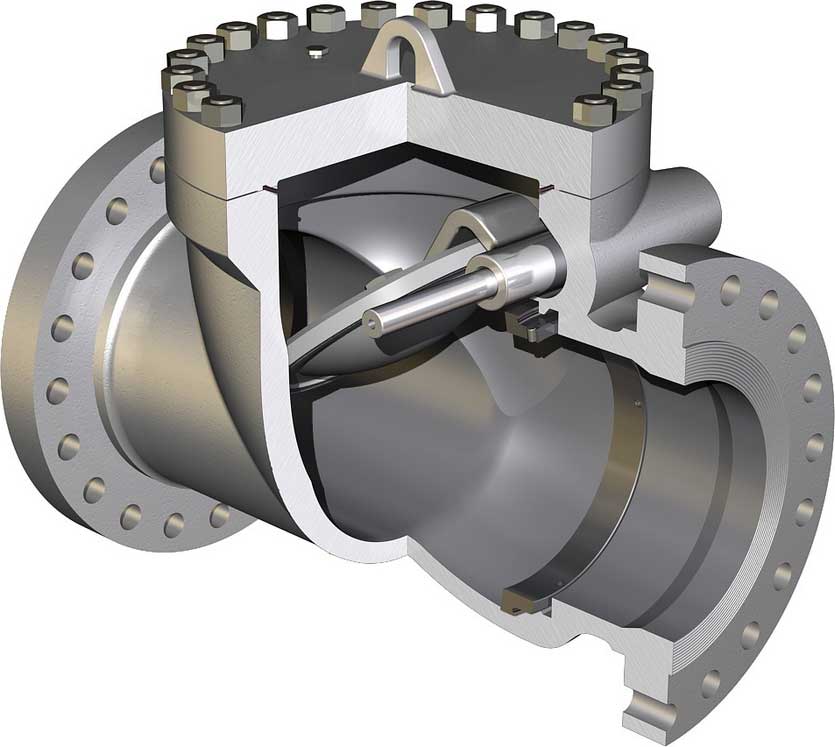
A basic swing Check valve consists of a valve body, a bonnet, and a disk that is connected to a hinge. The disk swings away from the valve-seat to allow flow in the forward direction...
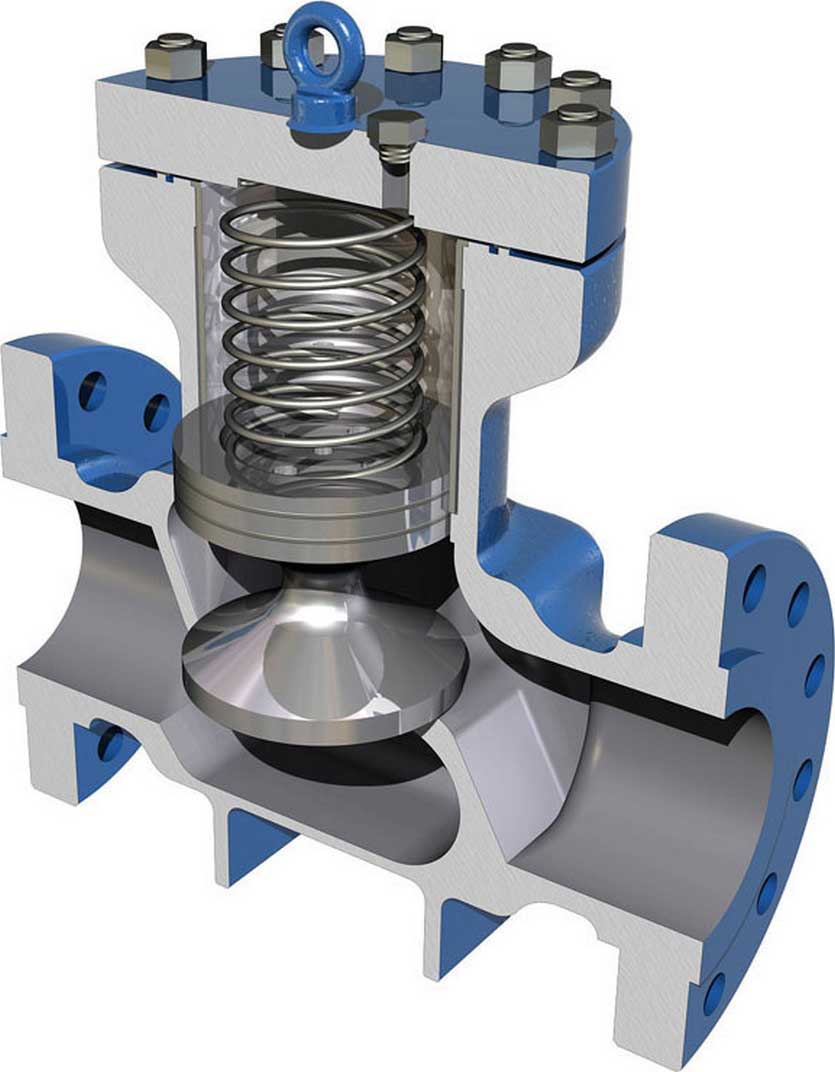
The seat design of a lift-check valve is similar to a Globe valve. The disc is usually in the form of a piston or a ball. This valves are particularly suitable for high-pressure service where velocity of flow is high...