
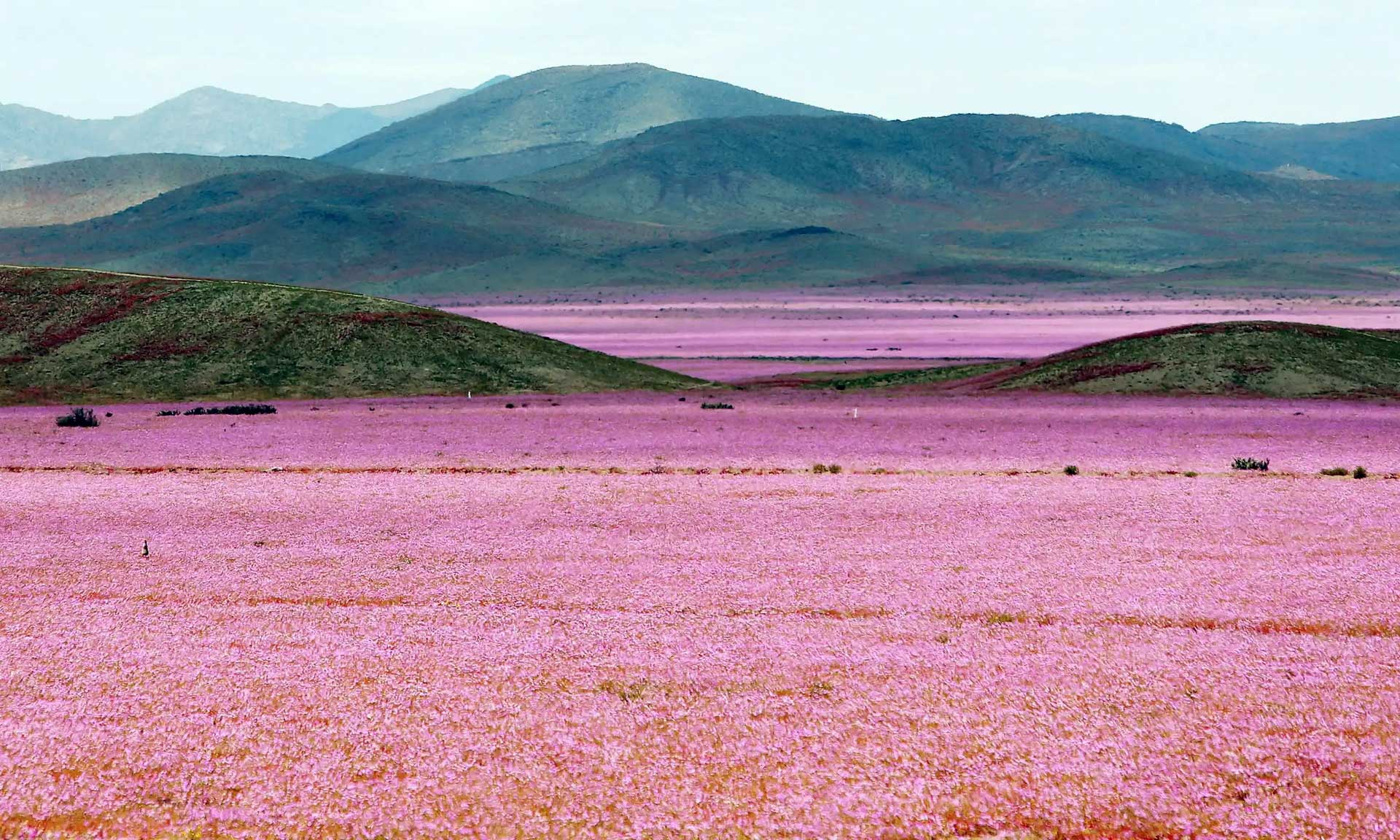
A mallow field in full bloom. Photograph: Mario Ruiz/EPA
October 9, 2025
Normally, such a desert bloom occurs every few years in the southern spring, when conditions are right. It then covers thousands of square kilometers.
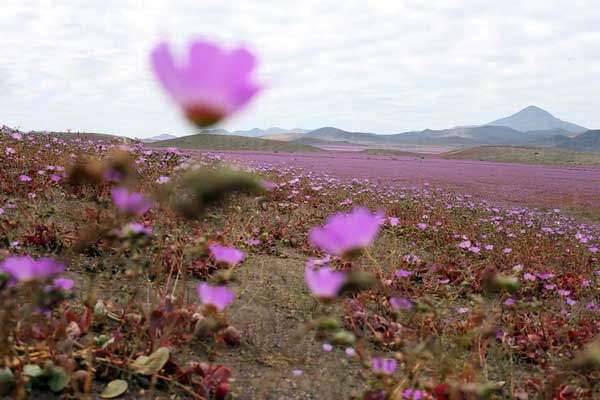
Close-up of mallow flowers. Photograph: Mario Ruiz/EPA
But the flowers are now appearing in winter, something that hasn't happened since 2015, experts say.
César Pizarro, head of biodiversity conservation at the National Forestry Corporation, said that 11-12 millimeters of rainfall in April, "plus the low cloud cover that has been very intense in the area and wets these surfaces every night, has contributed to the activation of these plants."

Flowers in the Huasco region. Photograph: Carlos Aguilar/AFP/Getty Images
While the famous spring-blooming desert covers 15,000 square kilometers (5,800 square miles), this winter bloom covers only a few hundred square kilometers.
At its peak, more than 200 plant species are in bloom. Recent weather conditions appear to have been particularly favorable for the "pata de guanaco," a purple flower that requires little water and prefers sandy locations.
Scientists have not yet determined whether this phenomenon, which was also observed in the winter of 2015, is "directly related to climate change, or to the El Niño or La Niña phenomenon," according to Pizarro.
 |
Joe Ruiz October, 2015 |
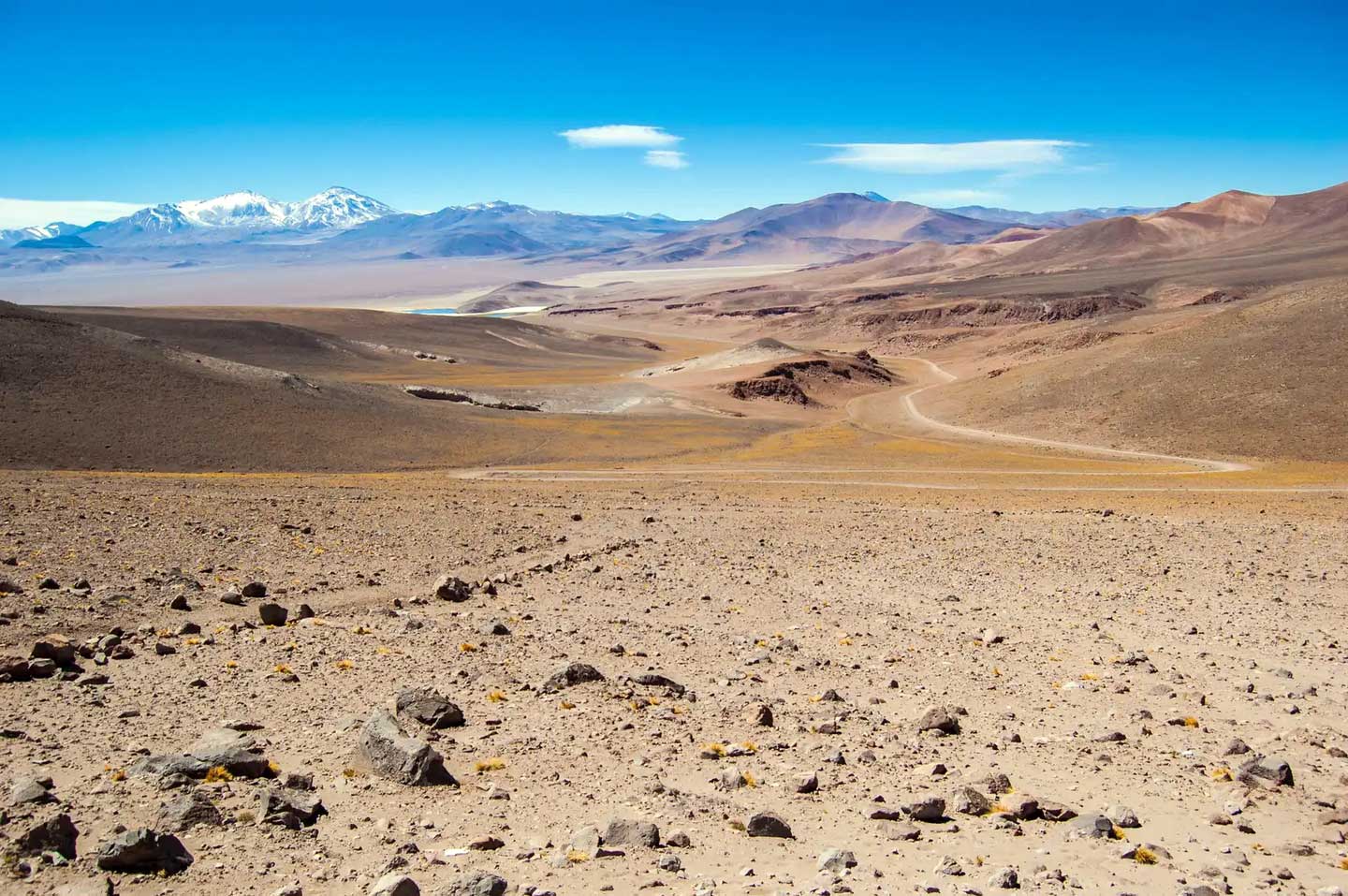
How the arid landscape usually looks. Photograph: Alamy