
Delhi metro - India
The Delhi Metro is an underground railway serving Delhi in North India, a city with nearly 34 million inhabitants. The metro also connects the nearby cities of Faridabad, Gurgaon, Noida, and Ghaziabad.
The Delhi metro network is the 16th longest in the world. In terms of annual passenger numbers, it is the 10th largest; after the Kolkata metro, it is the second oldest metro in India.
The Delhi network consists of 10 color-coded lines and a faster Airport Express line. It has 289 stations and a total length of 395 km (245 miles).
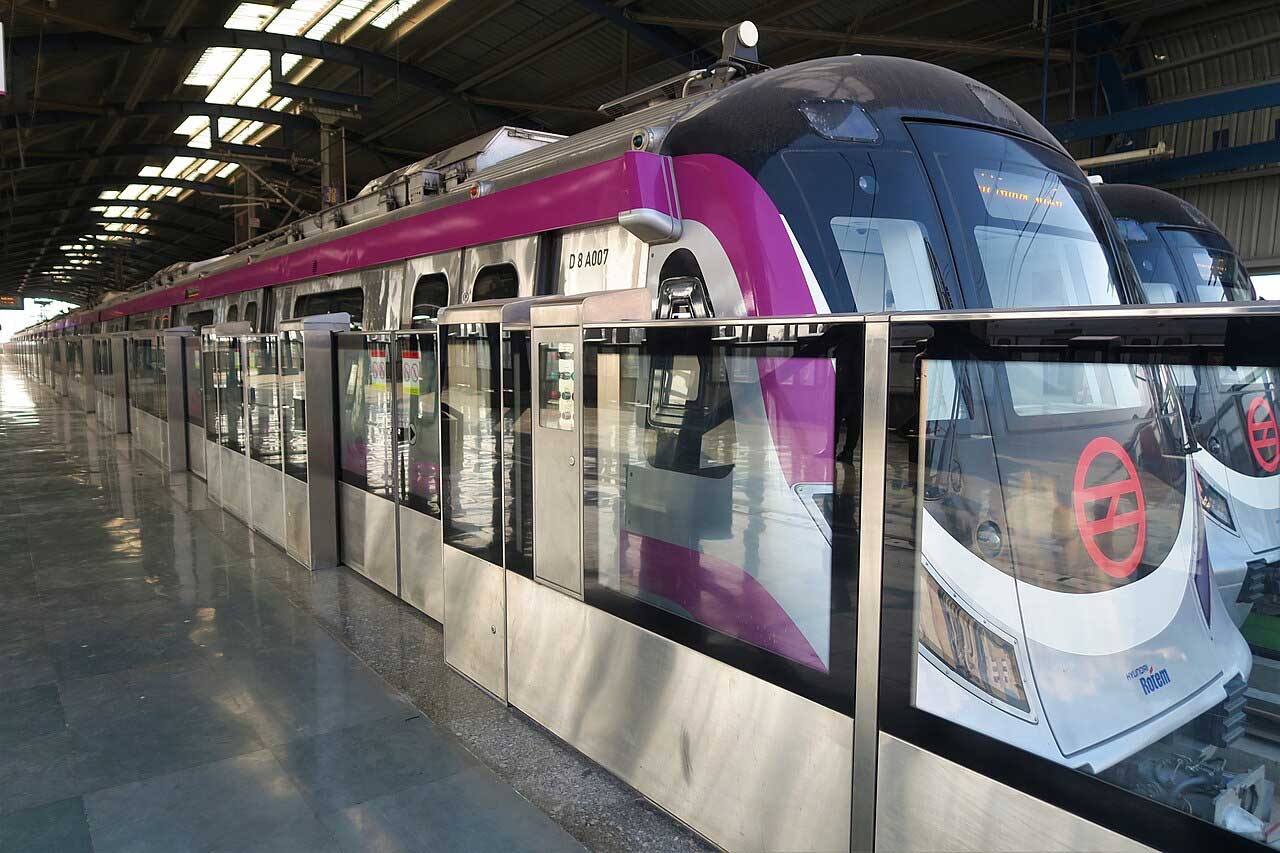
With both underground and aboveground lines and stations, the network transports millions of passengers daily. In August 2025, it broke a record by completing 8.1 million trips in a single day.
Although plans for a public transport system in the city had been discussed since the 1960s, its construction was set in motion by a population explosion – the number of inhabitants of Delhi doubled between 1981 and 1998.
This growth spurt led to an increase in private vehicles and pollution in the streets of Delhi, as well as severe overcrowding on buses and on the existing railways.
The Delhi Metro Rail Corporation (DMRC) began construction of the first section of the metro – the Red Line – in 1998. It opened in 2002.
Further sections of the system were put into operation in 2006 and 2011. Work is currently underway on the construction of another 61.7 km of track and 46 underground and aboveground stations.
Benefits of the Metro
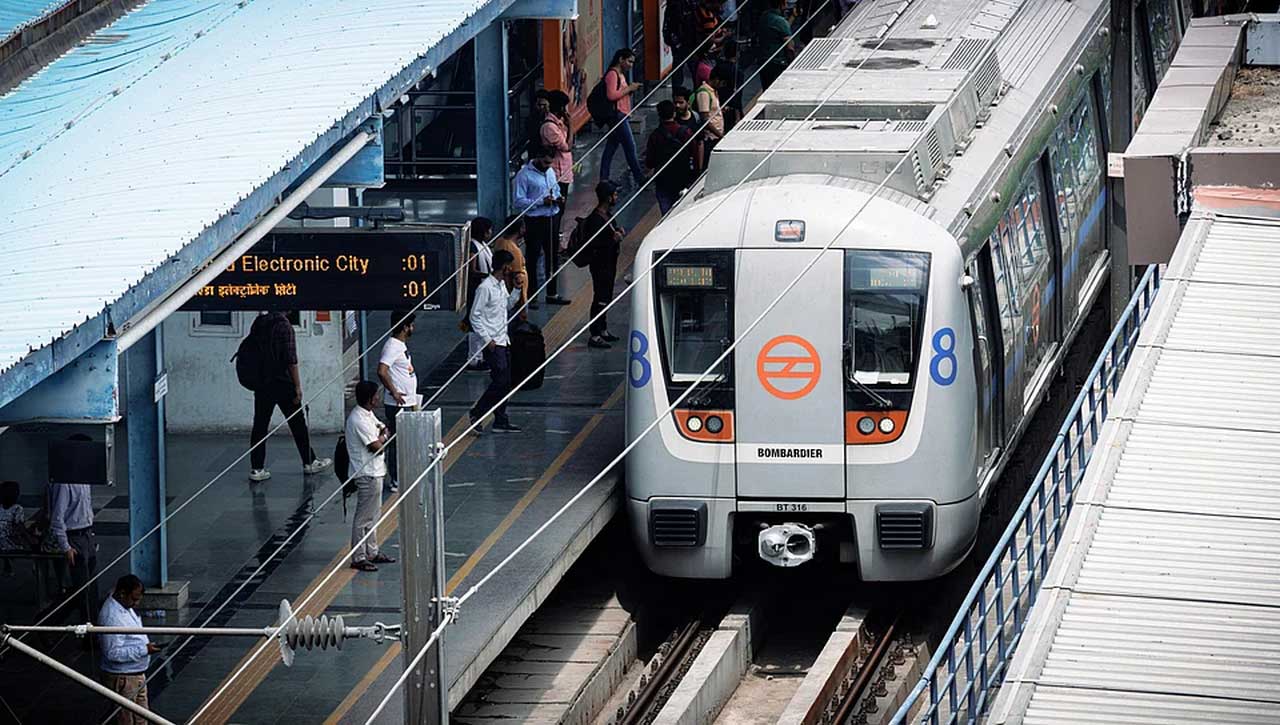
The Delhi Metro transports an average of 4.6 million people through the city daily. It has reduced the number of private vehicles on the road and cut traffic pollution by an estimated 630,000 tonnes per year.
In 2021, the Delhi Metro Rail Corporation (DMRC) reported that the network had saved passengers a total of 269 million hours of travel time that year.
The metro is also praised for the decrease in the number of traffic accidents in Delhi.
Execution of the work
The Delhi Metro was built by the Delhi Metro Rail Corporation (DMRC). Construction work began in October 1998.
The DMRC was a specially established organization, created in response to problems with the Kolkata Metro. The Kolkata project suffered severe delays and costs were exceeded twelvefold.
The project team in Delhi consulted engineers who had worked on Hong Kong's successful public transport system before construction began. They exchanged experiences regarding construction techniques and the operation of a metro.
Line 2 of the metro – the Yellow Line – presented a major challenge for the engineers, as it had to run underground for its entire length of 11 km.
The project team built the station sections of the line underground using the open-cut method. In this method, workers dug a U-shaped trench for the railway line and covered it with an earth roof.
Only one station – Chawri Bazar – had to be tunneled, because it was situated deeper than the rest. The Mandi House station on Line 3 – the blue line – presented another challenge for the engineers. Because the location was situated beneath busy roads, the structure had to be built from the ground up.
As part of the DMRC’s environmental policy, engineers have equipped many stations on the network with rainwater harvesting systems.
Reference.. ice.org.uk
Related Post(s)
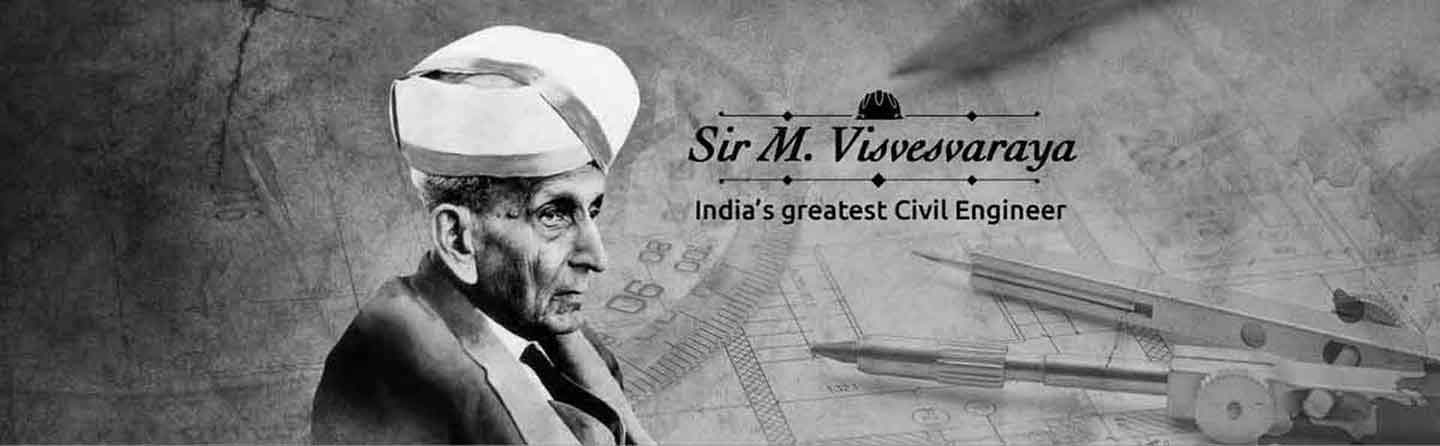
In remembrance of Sir Mokshagundam Visvesvaraya, the most outstanding Engineer of all times, the Engineering fraternity of India celebrates “Engineer's Day” every year on 15th of September...