Panama Canal
The Panama Canal is an 82 kilometer (51 miles) long artificial waterway that runs straight through Panama and connects the Caribbean Sea with the Pacific Ocean. The canal cuts through the narrowest point of the Isthmus of Panama and has long been a vital route for maritime trade.
At both ends of the canal, locks lift ships up to Lake Gatun, an artificial freshwater lake situated 26 meters above sea level. This lake was created by damming the Chagres River and Lake Alajuela to reduce the amount of excavation work required for the canal. On the other side, locks lower the ships back down. The original locks are 33.5 meters wide and allow the passage of so-called Panamax vessels.
The construction of the Panama Canal significantly shortens travel time for ships between the Atlantic and Pacific Oceans, allowing them to avoid the long and dangerous route around the southernmost point of South America.
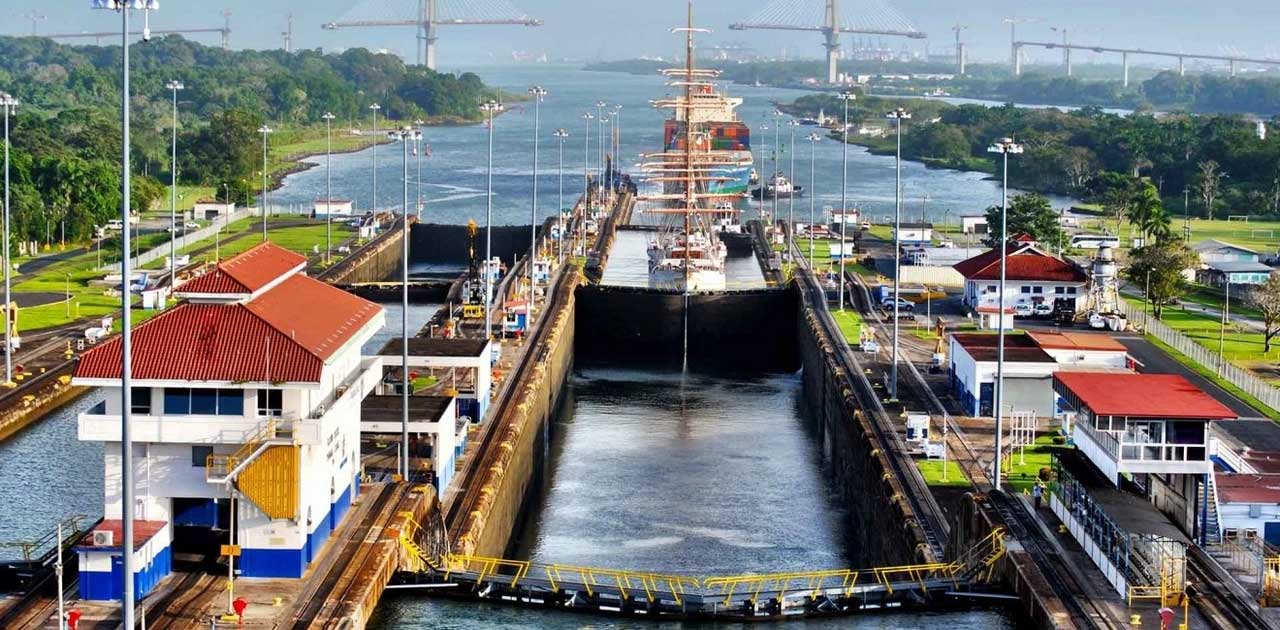
The decision to construct the Panama Canal was made in two phases: the French decided to build a canal in 1876, after which excavation work began in 1881. However, this project failed due to illness and bankruptcy. The United States made the final decision in 1902 to complete the canal after all and signed the treaty in 1903. American construction work began in 1904.
The Hay-Bunau-Varilla Treaty (November 18, 1903) was an agreement between the United States and Panama, under which the United States received exclusive rights to a canal through the Isthmus of Panama in exchange for financial compensation and guarantees for the protection of the newly established republic, and was built between 1904 and 1914.
Important facts about the Panama Canal
What did it cost in lives and money?
In the early design phase, technical standards were lacking or were likely unknown, which led to major
setbacks for the project. In particular, at least 5,600 workers lost their lives due to accidents and
illnesses. This was partly attributable to the ignorance and shortcomings of the project team(s).
The estimated cost of the project was 375 million dollars, or approximately 1.2 billion dollars
adjusted for inflation.
Why did President Jimmy Carter negotiate the treaties regarding the Panama ?
Panamanian protests against American control over the Panama Canal and the surrounding area threatened
the canal's operation and put US Latin America's relations under pressure. The administrations
of Johnson, Nixon, and Ford negotiated ownership of the canal, and in 1977, President Jimmy Carter
and General Omar Torrijos of Panama reached an agreement on two treaties that the Senate ratified
by a single vote.
What is contained in the Panama Canal Treaties?
The first treaty: The Treaty on Permanent Neutrality and Operation of the Panama Canal, guaranteed
the US permanent access to the canal and the right to defend it.
The second treaty: The Panama Canal Treaty, abolished the Panama Canal Zone on October 1, 1979,
and transferred the canal to Panama on December 31, 1999.
What is Panama's track record regarding the management of the Panama Canal? Under Panamanian management, the canal has remained a major artery of international trade and handles 5% of global trade. In 2016, Panama completed a ten year expansion project that doubled the canal's capacity (more on the capacity expansion below in this article).
Did the United States finance the expansion of the Panama Canal?
No. The Panama Canal Authority financed the $5.25 billion expansion project, including loans
from five multilateral banks.
Is the Panama Canal managed by China?
The Panama Canal is managed by a state owned company, the Panama Canal Authority. China is
the canal's second-largest user, and a Chinese company has operated ports at both ends of the canal since
1997. In March 2025, the Hong Kong based company announced plans to sell its port concessions to
the American company BlackRock.
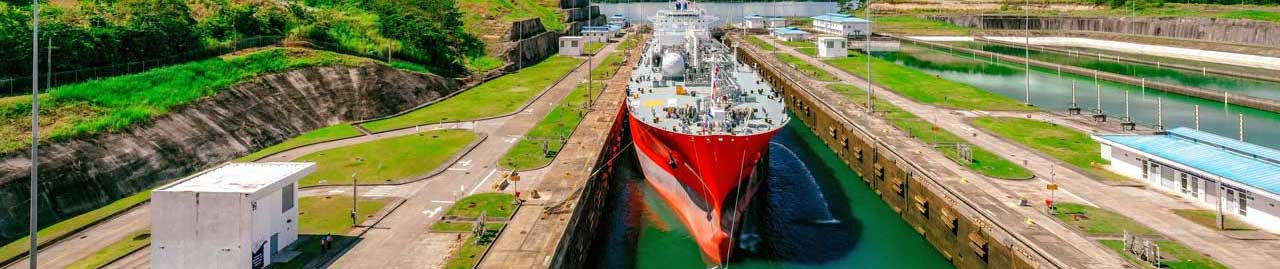
What are the tolls for the Panama Canal?
The tolls depend on the type and size of the ship and the cargo. They were increased in 2024 during a
drought that limited shipping traffic on the canal. The tolls cover the operation and maintenance of
the canal and generate $5 billion in annual revenue for Panama.
How has Panama responded to the American requests to return the canal to the US?
Panamanian President José Raúl Mulino has refused to negotiate control over the Panama Canal. However,
in response to American concerns, he announced an audit of the port management contracts by the Hong
Kong based company CK Hutchison.
Do U.S. Navy ships have to pay a toll to pass through the Panama Canal?
U.S. Navy ships are required to pay the standard toll for passage through the Panama Canal, in accordance
with Article II of the Neutrality Treaty, which prohibits discrimination against any nation. However,
they receive special treatment; the treaty guarantees that U.S. Navy ships will pass “promptly.”
Why were tolls on the Panama Canal increased in 2024?
In 2022, amidst declining revenues, the Panama Canal Authority began gradually increasing tolls.
The following year, after a severe drought led to restrictions on the number and size of ships using
the canal, an auction system offered ships the opportunity to pay more to bypass the queue.
Why are the United States concerned about the China-managed ports on the Panama Canal?
Long-standing concerns regarding two ports on either side of the Panama Canal managed by a Chinese
company include fears of Chinese intelligence regarding global trade and U.S. Navy operations, and
the potential use by Beijing of the Hutchinson Port concession to disrupt canal operations in wartime.
Panama Canal Expansion
In the early 2000s, it became clear that the original dimensions of the locks severely limited the
size and throughput of ships. The growth of global trade and the rise of so-called Panamax ships threatened
Panama's share in the major east-west shipping routes.
In April 2006, the ACP submitted a formal proposal for a $5.25 billion expansion, after which the issue
was put to a national referendum on October 22, 2006.
With an 80% approval, construction began in 2007 on two new lock complexes: Agua Clara on the Atlantic
side and a complex southwest of Miraflores on the Pacific side. Both locks were to be situated parallel
to the existing locks.
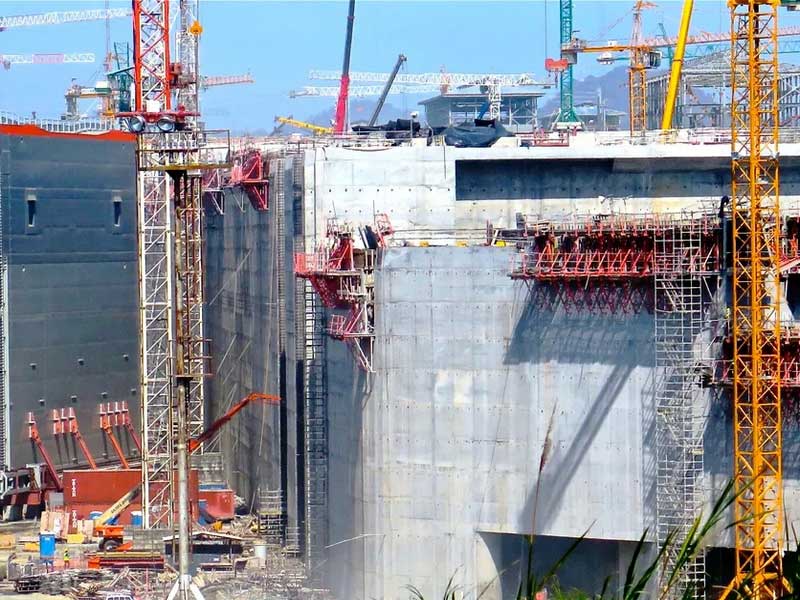
Each new lock is 427 meters long, 55 meters wide, and 18.3 meters deep, allowing Neopanamax vessels with a capacity of approximately 12,000 TEU to pass through. The project also included the widening of the feeder channels, the deepening and widening of the Culebra Cut and the Gatún Lake channels, and raising the maximum water level of Gatún Lake to ensure a reliable water supply.
Innovative water reuse basins (three per lock) recycle 60% of the water used during each passage, reducing net consumption by 7% compared to the original locks. On June 26, 2016, the expanded canal was opened to commercial shipping, and the Chinese container ship Cosco Shipping Panama was the first vessel to pass through the new locks.
However, the water supply remained the canal's greatest vulnerability. Dependence on the freshwater reservoir of Lake Gatún made daily passage susceptible to drought, which led to lower tolls and limited draft during dry periods.
Deforestation in the catchment area weakened the landscape's natural ability to retain water, while the increase in shipping traffic accelerated the spread of invasive species and exacerbated air and water pollution in the region.
In response to this, the ACP supported the proposed reservoir in the Indio River. This project was intended to increase water reserves for lock operations and provide drinking water to nearby communities. However, the construction of the reservoir would displace thousands of residents and raised social and ecological concerns.
Panama also faced increasing competition from alternative interoceanic routes. The proposed Nicaragua Canal remained inactive, the Colombian rail link across the Darién Gap had not yet secured funding, and melting Arctic ice made the Northwest Passage navigable for only a short period during the season.
In southern Mexico, the Interoceanic Corridor at the Isthmus of Tehuantepec was intended to transport cargo from coast to coast by rail, positioning itself as a complementary, and potentially competing, corridor to the Panama Canal.
In late 2024 and early 2025, President Donald Trump repeatedly threatened to “reclaim” the canal, denouncing the “excessive” tolls and claiming that China influenced its operation.
His remarks led to protests in Panama City and were quickly condemned internationally, with many governments affirming Panama's sovereign rights and the neutral status of the canal. Under pressure from domestic politics, a group of American lawmakers from both parties introduced the Panama Canal Repurchase Act in January 2025. This bill would authorize the executive branch to enter into negotiations to regain the exploitation rights, an initiative that was rejected by the Panamanian government and the Canal Authority as unfounded and destabilizing.
The story of the Panama Canal is one of human perseverance, engineering mastery, and geopolitical uncertainty.
Today, the canal remains a vital artery in the constantly changing flows of global trade and diplomacy. It continues to boost national prosperity, serves as a barometer for international cooperation, and reflects the balance between sovereignty and strategic influence.
The story of the Panama Canal is one of human perseverance, engineering mastery, and geopolitical uncertainty.
Today, the canal remains a vital artery in the constantly changing flows of global trade and diplomacy. It continues to boost national prosperity, serves as a barometer for international cooperation, and reflects the balance between sovereignty and strategic influence.
What the future holds for the canal is uncertain, but the legacy of global connectivity lives on and promises to shape the maritime world for generations to come.
Sources and References.. The sources are not
specifically named here; dozens can be found online.
This article is a summary of multiple reliable sources.
Related Post(s)
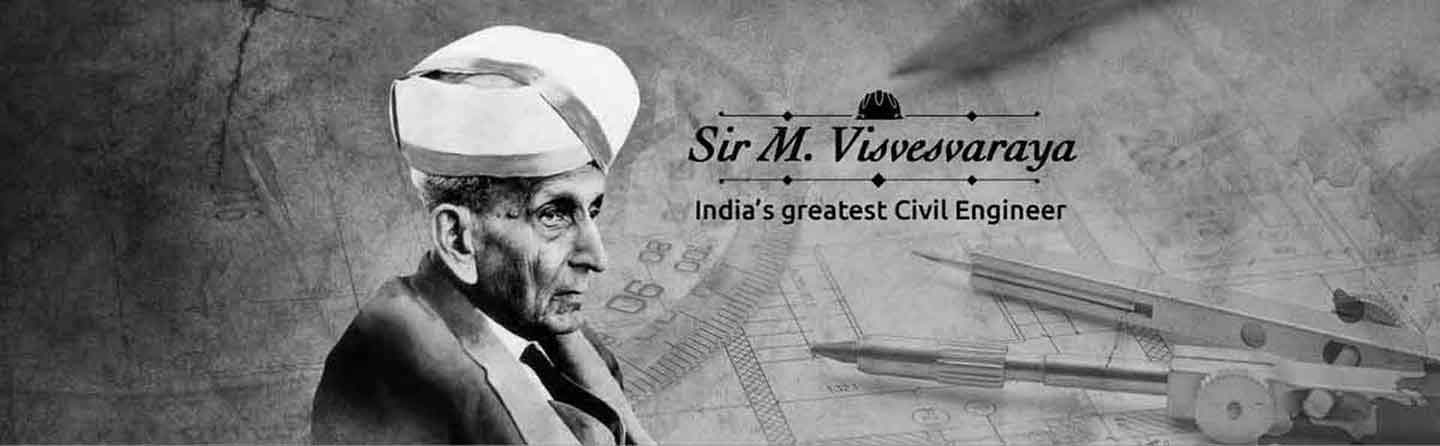
In remembrance of Sir Mokshagundam Visvesvaraya, the most outstanding Engineer of all times, the Engineering fraternity of India celebrates “Engineer's Day” every year on 15th of September...