|
Certified Mill Test Report (CMTR) |
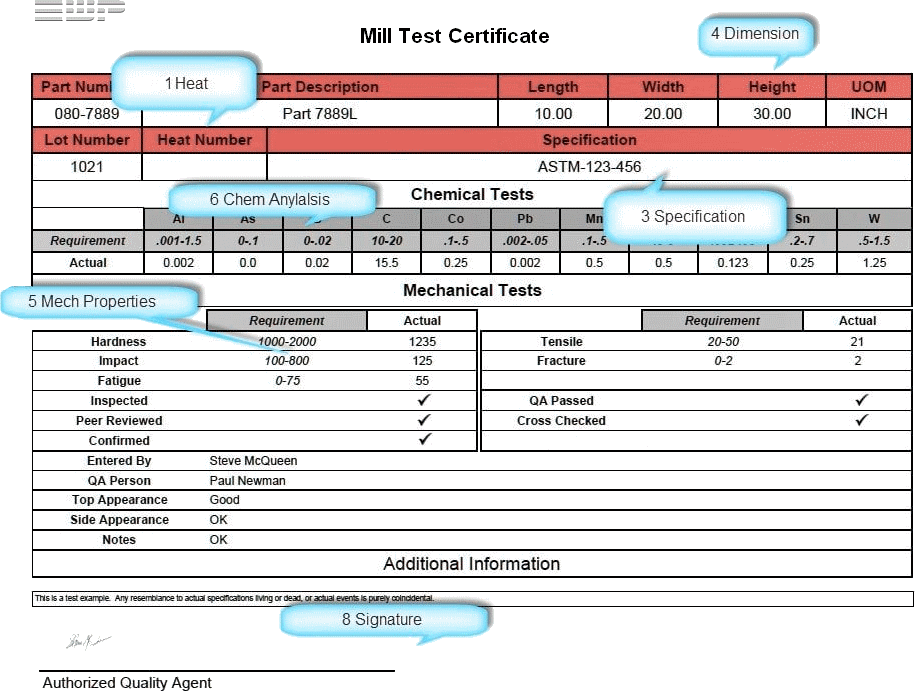
A Certified Mill Test Report (CMTR) is a written and signed document that is approved by a qualified party and contains data and information that attests to the actual properties of an item and the actual results of all required tests.
For the manufacturer and for the end user, it is crucial that the correct raw material is used in the production of a specific component, whether it is a pipe, a bolt, or steel plates. The raw material producer (steel mill) provides a CMTR, a document that guarantees quality and provides evidence of the steel’s chemical composition and mechanical properties.
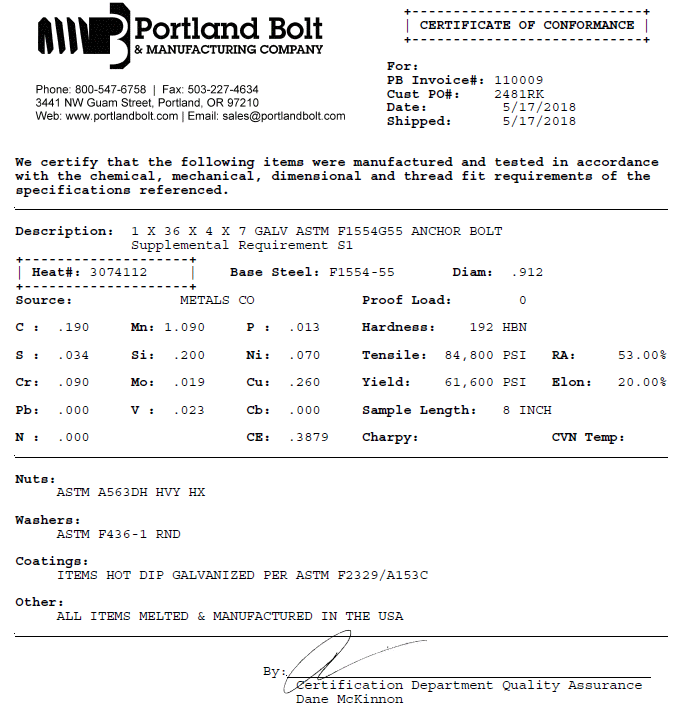
CMTRs may also have other names, such as a Mill Test Report (MTR) or Metallurgical Test Report. Regardless of the title of this document, it serves the same purpose, namely to document the test results for a specific batch of steel and to provide traceability to the origin of the material.
Material Heat Number
Each batch of rolled products, such as round bar, has its own mechanical and chemical properties.
To keep track of this, each batch is assigned a batch number. This allows a manufacturer to keep
each batch separate, so that it is clear which round bars belong to a specific batch.
Material Grade
When ordering raw materials, a material grade is specified. Not all grades are the same; some grades
may have strength requirements that are lower or higher than those of other grades. The CMTR must
clearly specify which quality specification is being met, so that the manufacturer can verify whether
the mechanical and chemical properties comply with the requirements of that specification.
Material Dimensions
This is simply a way to determine which diameters and lengths of the material have been manufactured
and delivered.
Mechanical Properties
The minimum strength requirements for a specific steel grade are expressed in pounds per square
inch (psi) or thousand pounds per square inch (ksi). These are referred to as the mechanical requirements
and are specified in terms of yield strength and tensile strength, as well as minimum elongation
in percent and minimum reduction of area in percent. It is crucial that these values be listed
in the CMTR to demonstrate that the delivered round bar meets the strength requirements of the
ordered round bar. Different grades of round steel bars require different tests to determine various
strength properties. Sometimes additional tests on finished fasteners are required, and these values
supplement the original Certified Mill Test Report.
Chemical Requirements
The chemical requirements for a specific type of steel are specified in the ASTM steel standards.
These standards provide a means of evaluating and classifying a specific type of steel, given the
wide variety of metallurgical properties found in different types of steel. Steel can consist of
carbon steel, structural steel, stainless steel, ferritic steel, austenitic steel, and alloy steel.
These steel standards serve as a useful guide for metallurgical laboratories and product manufacturers
in determining the correct processing and application procedures to ensure that the appropriate
steel is used.
Heat Treatment
Some steel grades require a heat treatment process to meet the strength requirements of the ASTM
standard. Both the heat treatment process used and the test results following the heat treatment
must be clearly stated on the CMTR.
Reference..
www.portlandbolt.com
Related Post(s)