

 |
Lube Oil Rundown tank |
A rundown tank is a storage tank designed to ensure an adequate supply of oil to the bearings of a pump, turbine, or compressor during failure, so that lubrication continues until the shaft stops rotating. The tank is typically made of stainless steel, is equipped with an overflow to maintain the oil’s viscosity, and may need to be insulated in cold weather.
API 614 specifies that rundown tanks must be sized to accommodate at least
three minutes of normal lubricating oil flow. This is intended to ensure an adequate minimum static oil
pressure when the tank is nearly empty, so that the bearings remain sufficiently lubricated during shutdown
at low lubricating oil pressure resulting from a failure in the oil supply system.
However, rundown tank elevation and orientation must be such so the lube oil static head pressure, when
the tank is completely full, does not exceed the low lube oil pressure shutdown setting.
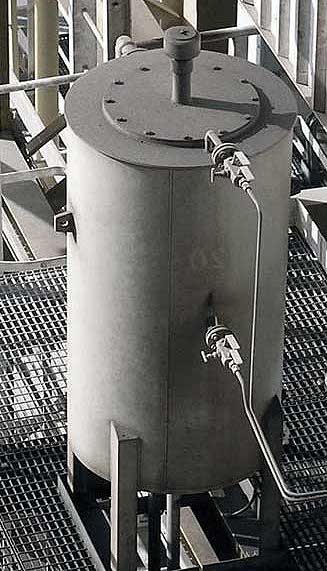
Rundown tanks can be installed vertically or horizontally, depending on their dimensions and the available space around the installation site. For installations in cold climates, heating cables and thermal insulation may be required on rundown tanks to maintain the oil temperature under cold ambient conditions.
Related Post(s)
