|
Camprofile gaskets in Shell and Tube Heat Exchangers |
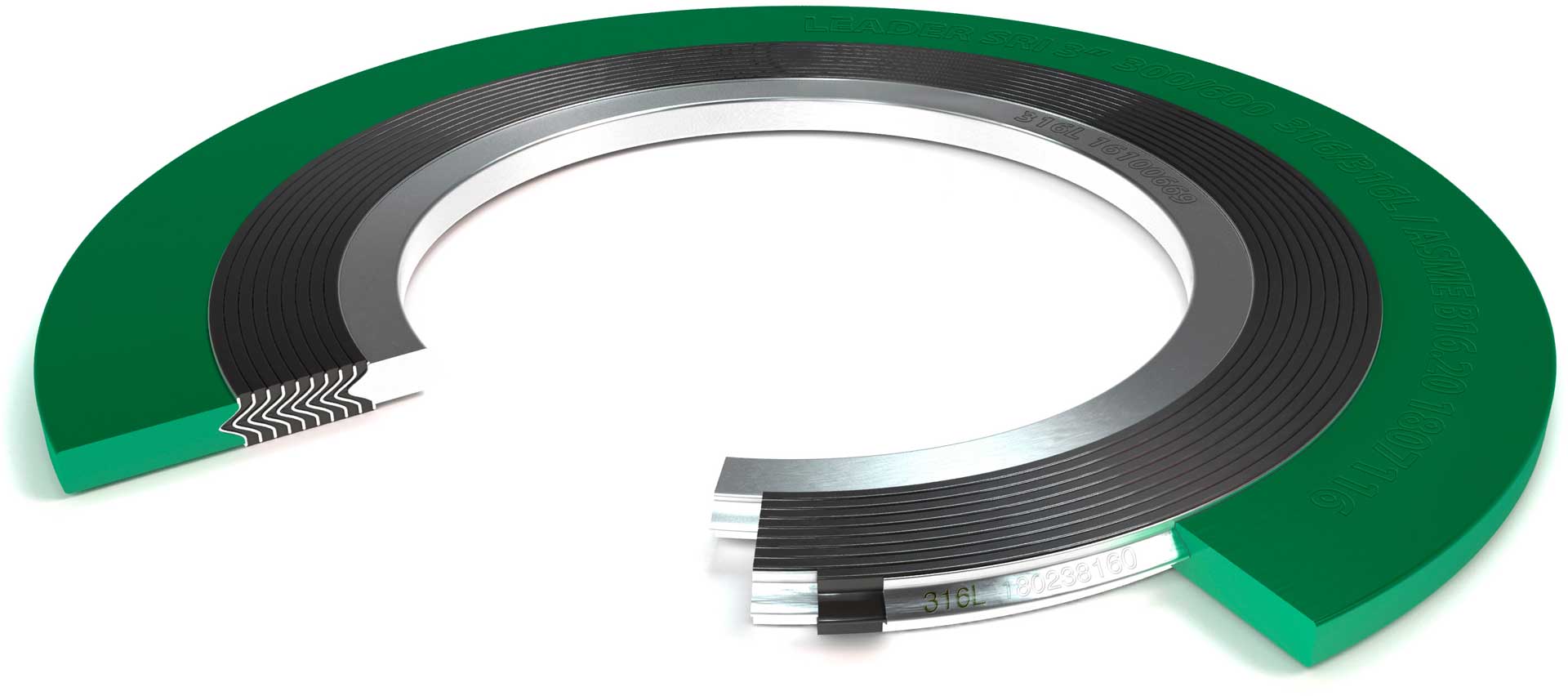
A semi-metallic gasket that is becoming increasingly popular in heat exchanger applications is the Camprofile gasket. Camprofile gaskets, or CAMs, as described in previous articles, consist of a solid metal core that is serrated and then filled with a thin, soft material such as flexible graphite or expanded PTFE.
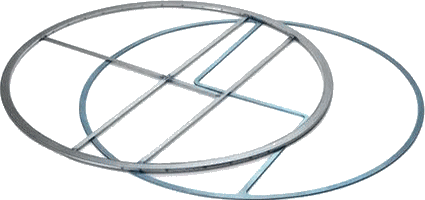
CAMs are the most popular choice for heat exchanger gaskets because they can withstand high temperatures and pressures; are highly customizable and can be manufactured in a wide variety of shapes, sizes, configurations, and materials; and provide a good seal under relatively low loads, especially compared to most other types of semi-metallic gaskets.
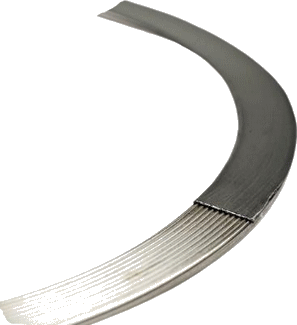
The image shows a typical CAM gasket without an outer guide ring, where the filler material has been partially removed to show the serrated finish of the metal core. This is the most common version of the CAM gasket used in heat exchanger applications.
In heat exchangers with multiple tube passages, the channels are fitted with flat metal plates that divide the head into separate compartments, and the thickness of these plates depends on the channel diameter.
Except for special high-pressure heads, the separation plates are always welded to the channel wall and also to the adjacent tube plate or cover, if one of these components is in turn welded to the channel.
If the tube plate or cover is not welded to the channel, the tube plate or cover is provided with grooves and the edge of the separation plate is sealed with a gasket embedded in the grooves.
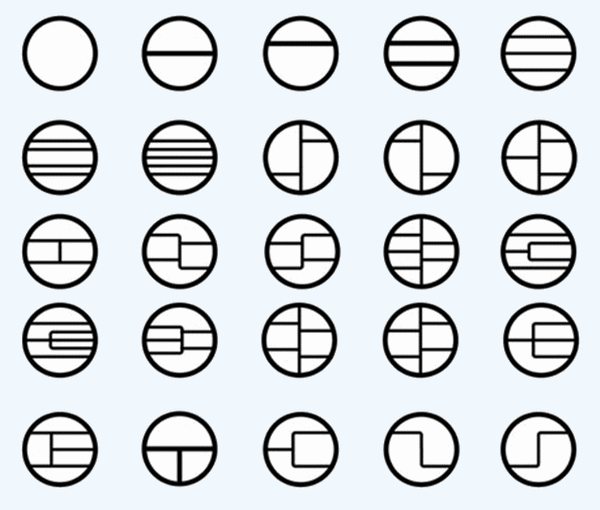
CAM gaskets for heat exchangers are available in round or non-round shapes, in standard or non-standard sizes. The gaskets are manufactured in various designs in accordance with API, ASME, ANSI, DIN, and BS standards for all types of applications. The choice of gasket type and metal depends on the operating conditions and the mechanical properties of the flange connection.
CAM gaskets can also be custom-made to customer specifications.
The metal core of CAM gaskets can be made of a wide variety of materials, including nearly all types of Stainless Steels, Monel 400, Nickel 200, Titanium, Hastelloy, Inconel, Soft Iron, Low‑Carbon Steel, and Copper
Filler materials can be..
Non-asbestos Millboard, Non-asbestos, Rubber, Graphite, PTFE and some other materials are certainly possible
as well.
Storing large gaskets requires extra care. A large gasket is delivered in a wooden frame, covered with protective clear plastic, or in a sturdy cardboard box, which provides sufficient protection for the gasket.
This applies in particular to Camprofile gaskets used in heat exchangers or other large equipment. If such a gasket needs to be stored for an extended period, it should preferably be stored horizontally, as vertical storage increases the risk of ovality.
PS: The largest CAM gasket I’ve ever installed had a diameter of
about 3 meters, with a DAM in the center (second profile type in the top left image above),
a sealing surface 9 mm wide, and a thickness of 4 mm. The heat exchanger was huge, with a total
weight of about 70 metric tons; the flanges were about 250 mm thick and, of course, had
a much larger diameter than the gasket itself. About 120 long 1 inch stud bolts were used, each
fitted with two washers made of a special material.
Believe me, installing it was a real challenge.
In short: In the context of gaskets for heat exchangers with a DAM (or dambar), the term refers to partition ribs used to separate different fluid channels from one another. These prevent internal leaks between the various channels (fluid channels) and ensure that the fluid flows through the designated tubes.
Related Post(s)