|
Environmental Health and Safety |
EHS stands for Environment, Health, and Safety. It is an interdisciplinary discipline and set of practices that organizations use to prevent harm to people and the environment.
EHS covers a broad range of activities, from reducing workplace hazards and managing chemical risks to ensuring environmental protection and regulatory compliance. Far more than a regulatory checkbox, EHS is central to a company’s operational integrity, employee well-being, and reputation.
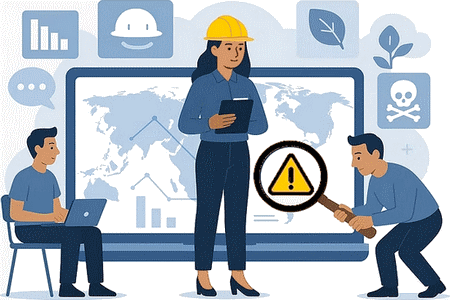
EHS (Environment, Health, and Safety) is a framework for protecting the environment, reducing exposure to biological and chemical hazards, and improving workplace safety. It's much more than just meeting a legal obligation—EHS is now essential for operational integrity, employee well-being, and company reputation.
This component focuses on minimizing the environmental impact of business activities. It includes controlling air pollution, handling hazardous substances, waste management, and complying with environmental laws and regulations. Effective environmental management helps organizations reduce pollution, conserve resources, and operate sustainably.
The health aspect of EHS (environment, health, and safety) focuses on protecting workers from biological, chemical, and physical hazards that can cause illness or injury. This includes implementing well-being initiatives, ergonomic programs, and occupational hygiene measures to ensure a safe and healthy workplace.
Safety within EHS (environment, health, and safety) refers to preventing occupational accidents and injuries by identifying hazards, enforcing safety protocols, and providing ongoing training and emergency response plans. Adhering to safety standards and regularly conducting risk assessments are essential for ensuring employee safety and the smooth running of operations.
The EHS acronym appears in several forms around the world, reflecting similar priorities but
sometimes differing in order or scope. Common variations include:
HSE: Health, Safety, and Environment
SHE: Safety, Health, and Environment
EHSQ/QHSE: Including “Quality” as a fourth pillar (Environment, Health, Safety,
and Quality)
OHS/WHS: Occupational Health and Safety or Work Health and Safety, focusing primarily on
workplace health and safety
Despite these differences, all these terms emphasize the integrated approach to managing environmental
protection, health, and workplace safety.
In short, environmental, health, and safety (EHS) policies are not only a legal requirement but also an essential element of responsible and sustainable business practices. These policies protect employees, minimize environmental impact, and ensure regulatory compliance. By understanding the importance of EHS policies and taking proactive measures to implement them effectively, organizations can create a safer and more sustainable future for everyone.
Related Post(s)