|
Emergency Showers and |
Emergency showers and eye wash stations are designed to wash people off in the event of a chemical emergency, such as when chemicals splash on the skin or into the eyes.
Common locations for emergency showers and eye wash stations include tank storage, loading and unloading areas, outdoor storage sites for hazardous materials, and near plant sections where acids and chemicals may be released. Indoor locations are usually found in or near laboratories and production areas where work is done with acids or chemical liquids.
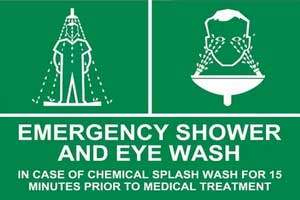
The first 10 to 15 seconds after exposure to a hazardous product, particularly a corrosive product, are crucial. Even a few seconds' delay in treatment can contribute to serious injury.
Emergency showers and eye wash stations provide immediate decontamination. They enable workers to wash out hazardous products that can cause injury.
Emergency showers can also be used effectively to extinguish clothing fires or to flush away contaminants from clothing.
Emergency showers and eye wash stations are necessary backups to minimize the consequences of exposure to chemicals.
Consulting the local occupational safety and health authority and checking relevant legislation for any requirements regarding the installation of this equipment is the starting point before emergency and/or eye showers are placed and installed.
The two standards below can be used as guidelines for the installation of this safety equipment.
This article uses the ANSI standard regarding guidelines, regulations, etc., unless otherwise specified.
The ANSI standard defines “flushing fluid” as any potable water, preserved water, preserved buffered saline solution, or other medically acceptable solutions. Local legislation may apply in some cases. In this article, the term “water” is used to refer to any of these acceptable flushing fluids, unless otherwise stated.
ANSI Z358.1 does not specify a duration for flushing the affected body part. However, the standard requires that equipment installed according to it must provide flushing fluid for at least 15 minutes.
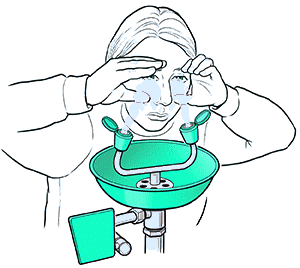
There is general agreement that it is very important to begin flushing the eyes immediately after skin or eye contact with a chemical.
First aid guidelines are available from the American Heart Association and the American Red Cross. These guidelines state that it may be beneficial to immediately flush eyes that have come into contact with toxic chemicals with plenty of tap water for at least 15 minutes or until a physician arrives. If tap water is not available, physiological saline or another commercially available eyewash solution may be used.
Always remember:
If irritation persists, repeat flushing. After administering first aid, it is important to seek medical attention as soon as possible. A doctor experienced in treating chemical exposure to the eyes and body should be consulted.
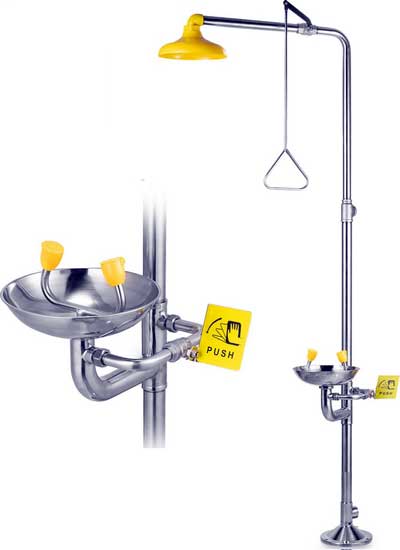
Emergency showers are for cleaning the head and body. They are not suitable for cleaning the eyes, as the high water pressure can damage them in some cases. Eyewash stations are exclusively for cleaning the eyes and face. Combination units that incorporate both a shower and an eyewash station are also available.
The need for emergency showers or eyewash stations depends on the properties of the chemicals used and the activities performed at the workplace. A risk assessment allows for the evaluation of potential hazards at the workplace and in the work areas. The selection of protective equipment – emergency shower, eyewash station, or both – should correspond to the respective hazard potential.
In some activities or work areas, the effects of a hazard may be limited to the worker's face and eyes. In such cases, an eyewash station may be the appropriate protective device. In other situations, there is a risk that the worker will come into partial or complete contact with a chemical. For this, an emergency shower may be more suitable.
A combination device allows for the flushing of individual body parts or the entire body. It offers the best protection and should always be used whenever possible. This device is particularly suitable for work areas where detailed information about hazards is lacking or where complex, hazardous work is carried out with many chemicals of varying properties. A combination device is also helpful when there are difficulties in dealing with a worker who, due to severe pain or shock following an injury, may be unable to follow instructions.
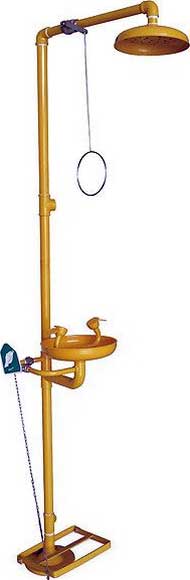 |
The ANSI Z358.1 standard specifies the general dimensions for an emergency shower and its various components. However, determining the correct dimensions can vary depending on the type of company or user (group), leading to unpredictable factors and making it difficult to select the right emergency shower. Therefore, these dimensions are not specified in this article. On the other hand, reliable suppliers and internal security personnel can certainly assist in selecting the right emergency shower. Additionally, local legislation provides guidelines regarding the requirements. |
Other ANSI Z358.1: Specs.
The emergency shower should produce a water jet with a diameter of at least 50.8 cm at a distance
of 152.4 cm. This diameter ensures that the water reaches the entire body, not just the head.
ANSI also recommends a shower head height between 208.3 and 243.8 cm above the floor. The minimum
water flow rate should be 75.7 liters per minute for a minimum duration of 15 minutes.
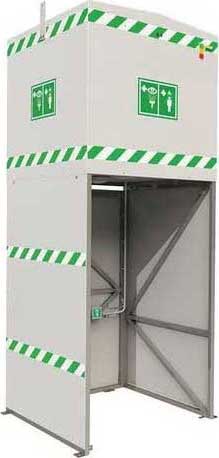
The shower should be designed to activate in less than one second and remain operational even if the user does not touch the valve (or lever, handle, etc.). The valve should be no higher than 173.3 cm. When using a shower enclosure, a clear area with a diameter of 86.4 cm must be ensured.
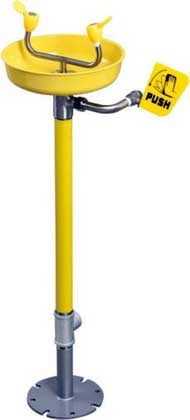 |
Eyewash stations must be designed to flush both eyes simultaneously at a flow rate of at
least 1.5 liters per minute for 15 minutes. |
With an eyewash station, the user should be able to open their eyelids with their hands while their eyes remain in the flushing water.
With an eye/face wash, the user should have enough space to hold their eyelids open with their hands while their eyes and face are in the water stream.
As with the shower, the unit should be designed to activate in less than one second and remain operational even if the user does not touch the valve (or lever, handle, etc.). The valve should be located in a clearly visible position.
Since eyewash nozzles typically need to be protected from airborne contaminants, the units should be designed so that removing these covers when activating the unit does not require a separate movement by the user.
For equipment to be effective, it must be easily accessible. ANSI recommends that a person should be able to reach the equipment within 10 seconds. In practice, it must be considered that the person needing the equipment may be injured and possibly blind. ANSI points out that an average person can cover 16 to 17 meters in 10 seconds. However, this does not account for a person's physical and mental state in an emergency situation.
Therefore, the “10‑second‑rule” can be adjusted depending on the potential effects of the chemical. When using highly corrosive chemicals, emergency showers and eyewash stations may need to be located closer to the work area. Refer to your risk assessment and consult a qualified professional. These facilities must be installed in such a way that they are not contaminated by corrosive chemicals used nearby.
The locations of emergency showers and eyewash stations must be clearly marked. The marking should consist of a symbol that requires no language skills to understand. The location must be clearly visible and illuminated.

The ANSI standard recommends lukewarm water with a temperature between 16 and 38°C. Temperatures above 38°C are harmful to the eyes and can increase the interaction of chemicals with the skin and eyes. Prolonged flushing with cold water (below 16°C) can lead to hypothermia and result in insufficient flushing or showering. In the case of burns (skin injuries), the American Heart Association recommends cooling them as quickly as possible and for at least 10 minutes with cool or cold drinking water.
Note: There is no medically or industry recognized specification for the temperature range of liquids considered lukewarm. The term is used to establish the acceptable temperature range for a given work environment based on factors such as the geographic location of the equipment, its position within the facility, and the types of hazardous materials to which the person may be exposed. A recommended temperature range for lukewarm liquids is between 15.6°C and 37.8°C.
Ice should not be applied directly to the skin. Chemical splashes should be flush off for at least 15 minutes, but the flushing time can be up to 60 minutes. The water temperature must be comfortable for the required duration. Water that is too cold or too hot will prevent workers from flushing or showering for a sufficient amount of time.
The installation of scald protection devices (temperature control valve or thermostatic valve) and flow meters ensures a constant temperature and flow rate. Emergency showers with heated water lines are available for cold or outdoor locations. In hot climates, outdoor emergency showers should also be equipped with a thermostatic valve to protect workers from excessively hot water.
Potentially hazardous products in the immediate work area.. all hazardous products must be properly labeled. Checking safety data sheets (SDS) and labels helps with hazard assessment. To select the appropriate eyewash station and shower equipment, the products used and their potential risks must be known.
Number of employees in an area with hazardous substances.. in areas where many employees work with hazardous substances, it may be necessary to provide additional equipment to ensure the protection of all employees.
Comfort.. additional work clothes and overshoes should be kept near the emergency showers, because contaminated clothing must be removed from the injured person as quickly as possible.
Quality of the flushing fluid.. by frequently changing the flushing fluid in closed systems and regularly cleaning the equipment, the accidental use of contaminated fluid can be prevented. Even in permanently installed eyewash stations, the water can contain impurities such as rust, limescale, and chemicals. Systems should be flushed and cleaned regularly.
Neutralized Solutions.. it seems logical to neutralize acid contact with a base, or vice versa. However, there are concerns that attempts to neutralize skin or eye contamination could increase the risk of injury by causing:
Even the best-designed emergency shower or eyewash station offers insufficient protection if it is not properly maintained and inspected. The ANSI standard specifies clear requirements for inspection, activation, and maintenance to ensure the continuous operational readiness of these devices.
Weekly activation and annual inspection: The standard mandates that permanently installed emergency showers and eyewash stations must be activated weekly to verify proper function and flush any deposits or stagnant water from the supply line. This brief activation confirms that the valve opens fully within one second or less and that the water flow remains smooth and constant throughout operation.
In addition, a comprehensive annual inspection is required to confirm ongoing compliance with all performance criteria. These include:
Careful documentation of inspections is essential; not only for OSHA compliance but also for protection against liability claims and for conducting plant audits.
Let's start with the water, which must serve its purpose in every emergency shower and eyewash supply.
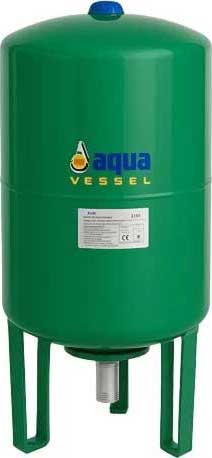
The emergency shower or eye wash (if installed separately) must be equipped with a connection to a potable water source. The pipeline(s) for this must supply sufficient water to the emergency equipment (see specification above for all recommendations).
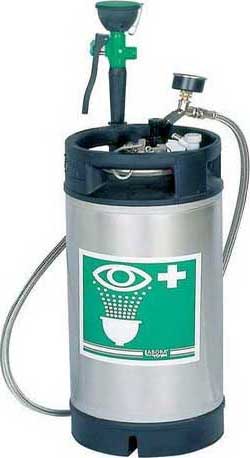
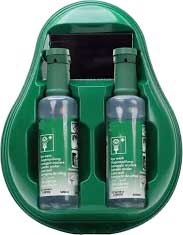
When installing an emergency shower, the following points, among others, must be taken into account:
In addition to the cost of an emergency shower, there may be other significant expenses that you hadn't anticipated.
All in all, installing and commissioning a new emergency shower is not as simple as one might think. The technical requirements and regulations may seem complicated and difficult to understand to some, but they are of the utmost importance for any employee who might find themselves in an emergency situation.
Related Post(s)