|
Insulated Pipe Supports |
Insulated pipe supports are designed to reduce direct heat transfer between pipes and their supports, as heat loss is created during conduction at a support.
They are also called pre-insulated pipe supports or pipe shields, and are also used to support and protect pipelines and provide thermal insulation, vibration dampening, and sound insulation to a piping system.
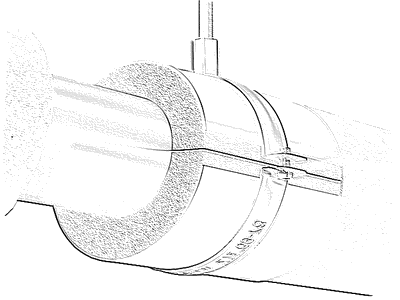
There are generally three types of heat-insulated pipe supports..
Hot‑temperature pipe supports, often called “hot shoes” or pre‑insulated supports, are specialized, load-bearing supports designed to support pipes operating at high temperatures (up to 760°C or higher) while simultaneously protecting surrounding infrastructure from heat. They prevent insulation damage, reduce energy loss, and prevent corrosion under insulation (CUI) by using high‑density materials.
Cold insulated pipe supports, or “cold shoes,” are specialized load‑bearing supports designed for low temperature and cryogenic pipelines (e.g., LNG, HVAC) to prevent thermal bridging between the cold pipe and the supporting steel structure.
Acoustic pipe supports are specialized suspension systems with clamps and pads that reduce structure‑borne noise and vibration in ductwork and HVAC systems by up to 85%. They feature dampening liners (such as rubber or elastomeric composites) that separate the pipe from the building structure, preventing sound transmission, rattling, and thermal bridges.
In short.. Insulated pipe supports are used in various applications, as described above, and different insulation materials and densities are available to support the pipe's load over a wide temperature range.
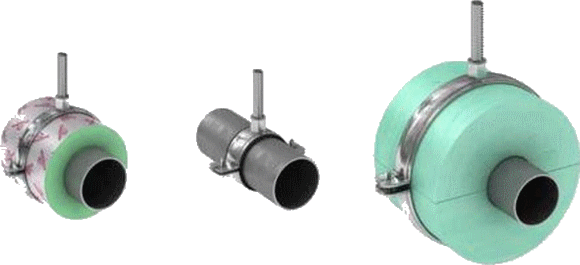
Insulated pipe supports are NOT welded to a pipe
primarily to prevent thermal bridging (heat loss or heat gain), avoid the formation of local
stress points that cause fatigue cracking, and eliminate corrosion under insulation (CUI).
Insulated pipe supports isolate the pipe from the external structure for maximum efficiency. They provide an immediate thermal break, eliminating heat loss or gain through the type of insulation, and ensuring that heat is retained either inside or outside the pipe, depending on the operating temperature.
Related Post(s)