

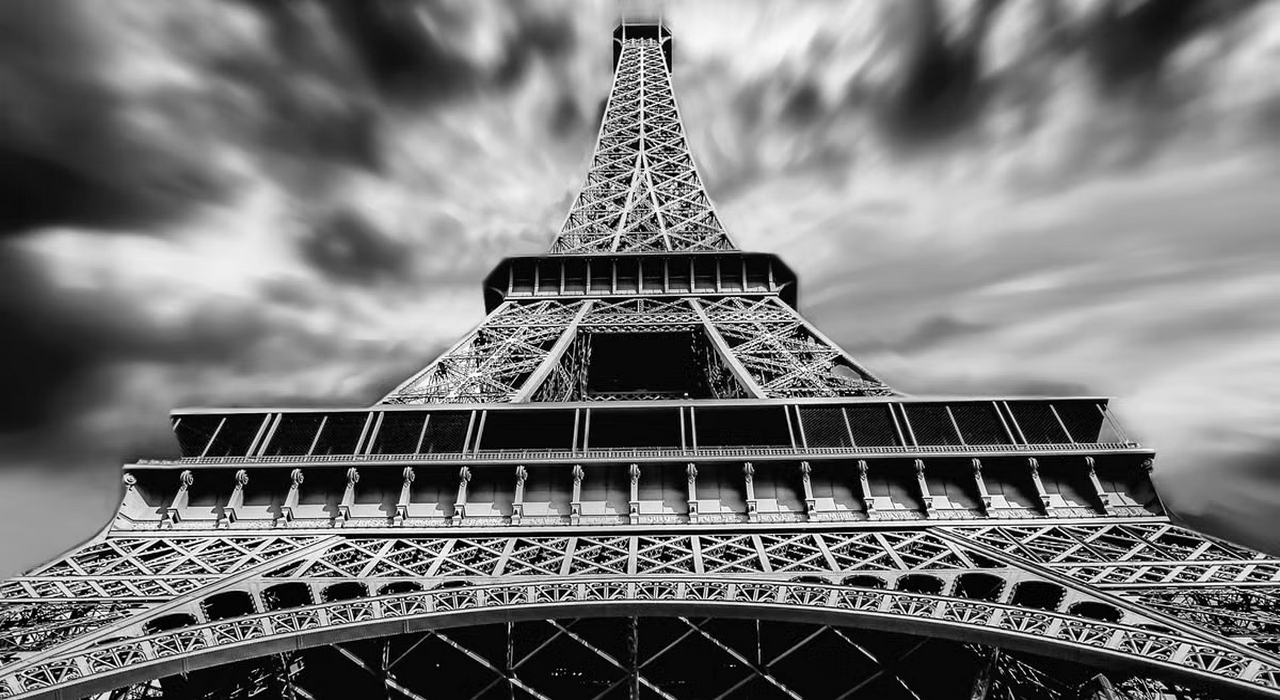
The Eiffel Tower is a lattice tower located on the Champ de Mars in Paris, France. It is named after the engineer Gustave Eiffel, whose company designed and built the tower between 1887 and 1889.
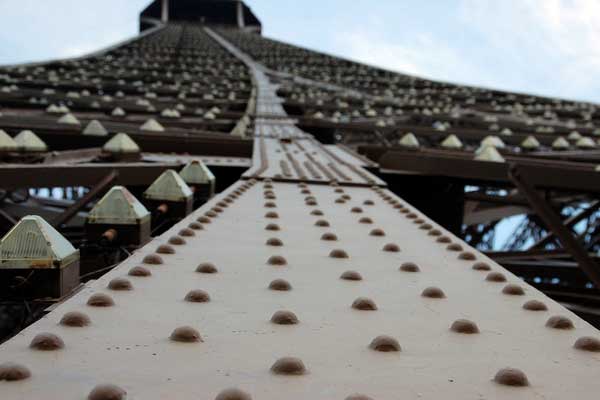
The Eiffel Tower is made primarily of puddled iron. This special type of highly refined wrought iron was the precursor to modern structural steel, and its framework alone weighs 7,300 tons.
 Photo
source cannot be determined
Photo
source cannot be determined In 1884, plans were being worked on for a grand monument for the 1889 World's Fair in Paris, intended to mark the centenary of the French Revolution of 1789.
 Photo
source cannot be determined
Photo
source cannot be determined
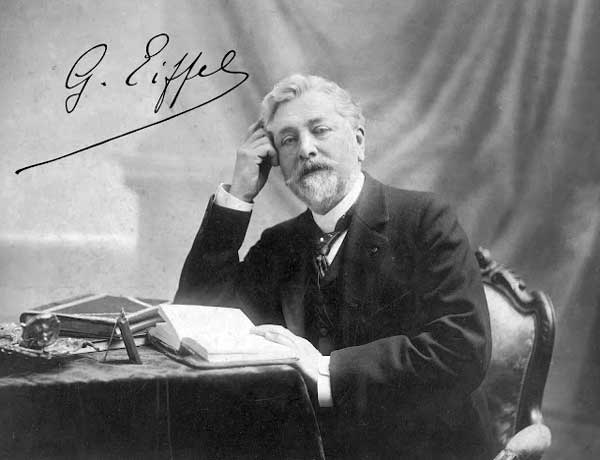
Gustavé Eiffel, a brilliant engineer, was one of the few who had mastered the principle of building steel structures. It was the two chief engineers of Eiffel&Cie, Maurice Kœchlin and Emile Nouguier, who came up with a bold plan for the construction of a 300 meter metal tower, equivalent to the symbolic number of one thousand feet.
Eiffel was one of the first engineers to recognize the importance of wind forces for tall structures. He designed the surface of his tower to be so minimalist that the wind finds virtually no purchase. All parts of the tower form an open lattice structure of lightweight truss girders, through which the wind can flow unimpeded.
The Eiffel Tower was one of the first tall structures in the world to have passenger elevators, which proved extremely popular with tourists. The revenue from the Eiffel Tower's elevator tickets almost completely covered the construction costs and all within just one year.
Reference(s)..
paris-fvdv.blogspot.com
www.pbs.org/wgbh/buildingbig
Related Post(s)
