

Wastewater is generated by industrial, commercial, or domestic applications. Municipal wastewater (sewage) refers specifically to all water and waste collected from drains, sinks, toilets, and gutters, and may include rainwater and stormwater.
Municipal wastewater consists of water and particles that usually originate from excrement, food waste, chemicals from personal care products, cleaning products, cosmetics, and medicines, etc. These solids or particles are dissolved, suspended, or floating in the wastewater. Through purification, they are separated or filtered as sludge.
Industrial plants also generate significant amounts of wastewater containing chemicals or other substances specific to their production process, known as industrial wastewater.
Two terms that refer to wastewater, depending on its location in a treatment process, are influent and effluent. Influent basically refers to wastewater that flows into a treatment facility, while effluent is the wastewater that leaves the same facility after treatment.
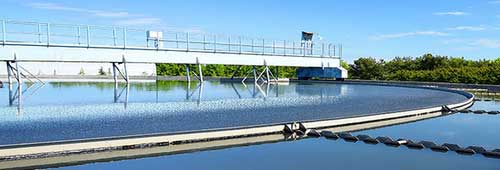
Wastewater treatment refers to the processes that wastewater undergoes to meet a specific standard or discharge quality, often set by local or national regulatory authorities.
In cities and towns with a central sewer system, this usually takes place in a wastewater treatment facility, also known as a sewage treatment facility. Here, the wastewater goes through several steps before it is reused or discharged into a body of water.
In places without a sewerage network, buildings or homes may have septic tanks for wastewater treatment (decentralized systems).
In many cases, it is not advisable for individual companies to treat their own wastewater. They may not have the necessary permits, and the process can be too complex to carry out without significant resources. A professional wastewater treatment facility has the necessary permits, experience, and technical knowledge to treat and dispose of industrial wastewater in an affordable, efficient, and, above all, safe manner.
It is essential to treat industrial wastewater because much of it eventually ends up back in the environment. This happens after the concentrations of pollutants in the wastewater have been reduced to safe levels for discharge. High levels of pollution in wastewater can cause serious damage to local ecosystems and pose health risks to local residents. Effective and ethical wastewater treatment helps to minimize this potential damage.
What can be found in industrial wastewater?
Depending on the industry, industrial wastewater can contain a wide range of contaminants, including
major contaminants those described below.
Oil and gas The oil and gas industry, particularly oil and gas extraction, produces wastewater in the form of cleaning water and oil waste. The residues left in tanks must be disposed of properly, as must the water used to clean those tanks. The water used to clean heavy equipment also becomes wastewater that must be disposed of properly in accordance with local and federal regulations.
Industrial production Industrial production facilities such as iron and steel mills produce wastewater through various processes. The production of iron from ore in blast furnaces requires large amounts of cooling water, which can become contaminated with waste products such as ammonia and cyanide. Water is also needed as a coolant and lubricant in steel production. Production facilities can also produce significant amounts of oil waste in their wastewater.
Construction The construction sector typically produces large quantities of construction waste, but also wastewater in various forms. Cleaning heavy construction equipment can generate wastewater that construction companies must process responsibly. The use of chemicals such as paint, solvents, and adhesives also leads to wastewater that companies must dispose of safely.
These were a few examples of industries where wastewater treatment is necessary, and there are many more.

It is essential to treat wastewater because much of it ends up back in the environment. This happens after the concentrations of pollutants in the wastewater have been reduced to safe levels for discharge. High levels of pollution in wastewater can cause serious damage to local ecosystems and pose health risks to local residents. Effective, ethical wastewater treatment helps to minimize this potential damage.
Remark(s) of the Author...
A while ago, I had the opportunity to work with some amazing people who knew everything there was
to know about industrial waste processing. I wasn't very familiar with wastewater treatment, and I learned
a lot from the ladies and guys during that time.
Thank you all for the lessons.
In everyday life, it's normal for us to dispose of our waste in designated containers, without having to fill out any paperwork.
When we want to clean the electric lawnmower, we usually do so with the garden hose, and the same applies to the waste container itself, without having to fill out any paperwork.
When disposing of or cleaning industrial equipment, however, the situation is different, because the waste product must be clearly described, because industrial wastewater can contain a wide range of pollutants.
A good description/specification allows you to better determine what you want to have disposed of or cleaned, and you can use that information to decide on further steps. All involved with the job and the environment will be very grateful to you.
comments on this article can be found here
Related Post(s)
