

 |
CAESAR II pipeline stress analysis |
CAESAR II is the most widely used software for pipeline stress analysis in the oil
and gas industry. It calculates thermal expansion stresses, continuous and incidental loads in accordance
with ASME, API, EN and more important standards.
In EPC pipeline engineering, CAESAR II is a must have basic software in virtually every
project.
(EPC - Engineering, Procurement and Construction)
hopefully you can follow.. CAESAR II was developed in the mid-1980s by COADE Inc, and was acquired by Intergraph Corporation in 2010, which was subsequently acquired by Hexagon. In May 2026, Hexagon spun off these software divisions into an independent, publicly traded company called Octave.
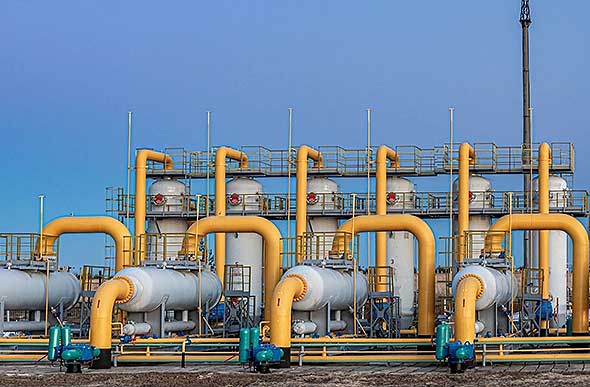 Image..
modpacksystem.com
Image..
modpacksystem.com In the context of piping, the name CAESAR stands for Computer Aided Engineering for Stress Analysis of piping systems. However, most engineers know it by name, but not by its full meaning.
Essentially, the engineer builds a piping model and inputs the various loads to which the system may be subjected, such as:
CAESAR II processes this input and calculates the resulting forces and moments throughout the system. These results are then compared to the design standards to ensure they are acceptable.
CAESAR II can perform static, dynamic, and flange analyses, taking into account wind, wave, seismic, thermal, and pressure loads, as well as weight and support.
It can be stated that CAESAR II is not limited solely to static analyses (i.e., system weight, temperature, pressure, wind loads, and snow/ice loads); it also performs dynamic analyses, with a wide range of scenarios, such as and including:
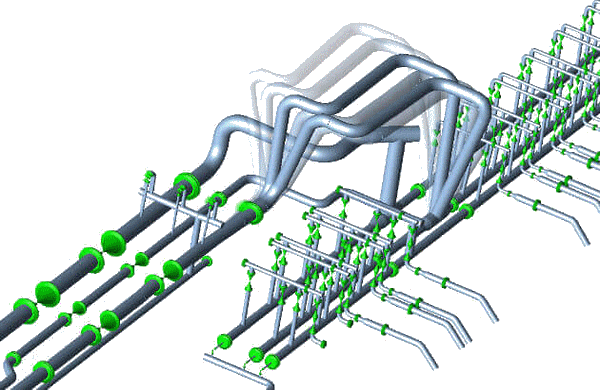 Image..
www.octave.com
Image..
www.octave.com Caesar's Flexibility.. one of the features of CAESAR II is its bidirectional integration with other CAD systems. This integration significantly reduces the time required to generate analysis models and communicate design changes. In short, CAESAR II is highly flexible for a wide range of projects and can help any engineer simplify his or her work.
AI Overview July 5, 2026 ..Octave (a business
software and data spin off) is an independent, publicly traded company headquartered in the United
States (Huntsville, Alabama / Madison) and with its registered office in Ireland.
Hexagon (the industrial technology parent company from which Octave originated) was founded and is based
in Stockholm, Sweden.
References..
hexagon.com
www.octave.com
Remark(s) of the Author...
Years ago, I was first introduced to CAESAR and was quite skeptical about the added value of the software.
During a project where titanium material was used for the internal and external expansion of an oxidation column, many new pipes with diameters ranging from NPS 2 to NPS 18 were required.
Manual stress calculations yielded reliable results but lacked economic and cost-saving aspects. This was partly because the wall thicknesses of the pipes were not very thick (Sch 40 (2.77mm) for the smaller diameters and Sch 10 (4.78mm) for the larger ones). In addition, very specific calculations were required for the titanium material.
A retired person, who had worked at the former Dutch “Stoomwezen” and who also had a lot of experience with CAESAR, was willing to assist me with the calculations.
To make a long story short... within a few days, I was completely convinced by what I saw on the computer screen.
What I saw was impressive, because it exceeded my expectations and ideas about how the new piping components could be installed stress free and economically.
After various simulations and adjustments to the Caesar model, only one option remained that we both agreed on. The material was ordered, prefabrication began after a few weeks, followed by installation in the partially shut down plant in a very short time.
After the handover to the plant's process department and a few days of trial runs, the customer was very satisfied, and CAESAR gained a new “supporter” in me.
Related Post(s)
