|
How a Vacuum Truck Works |
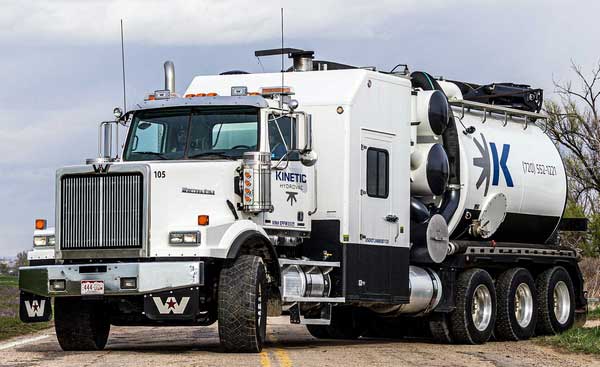
The vacuum truck (or vac truck) is a specialized industrial vehicle, equipped with a powerful pump, a storage tank and a suction hose, designed to pneumatically load liquid, semi-solid or dry materials.
The operation of a vacuum truck is similar to that of a domestic vacuum cleaner, but on a much larger scale. These industrial workhorses utilize the fundamental principle of pressure differential. It all starts with the engine of the truck, which powers a pump to create a powerful airflow, rapidly removing air from the tank to generate a vacuum that forces liquids, sludge, and solids through a suction hose into the holding tank.
| Component | Detailed Description |
| Power System and Vacuum Generation | Vacuum trucks are equipped with a powerful motor, often the truck's own engine, which drives a vacuum pump. This pump removes air from the storage tank, creating a low-pressure zone, or vacuum. |
| Vacuum Pump Mechanism | Depending on the model, vacuum trucks use either rotary vane pumps or positive displacement
pumps. Rotary vane pumps operate with a series of vanes within a rotor assembly within a cavity, which creates suction. Positive displacement pumps, on the other hand, change the volume of a chamber to create a vacuum by mechanically expanding and contracting the space within a closed environment. |
| Suction and Storage | Once the vacuum is created, the truck's inlet valve opens, allowing the external atmospheric pressure to push the waste through the suction hose into the tank. The materials remain safely contained there until they reach a designated disposal site. |
| Hose System | The trucks are equipped with a flexible, durable hose, designed to reach the cleaning location and suitable for vacuuming abrasive or potentially corrosive materials without damaging them. |
| Pressure Balance | Operators can precisely adjust the inlet and outlet valves of the vacuum trucks, which is essential for controlling the pressure difference. This balance is crucial for the smooth flow of materials in and out of the tank. |
| Material Disposal | After the waste is sucked into the tank and the truck arrives at the disposal site, operators can manipulate the controls to reverse the pressure inside the tank. This change forces the materials out through a discharge valve, usually located at the back or bottom of the tank. |
| Safety and Maintenance | Vacuum trucks are designed with safety mechanisms such as pressure relief valves to prevent
dangerous vacuum or overpressure buildup in the tank. Consistent and thorough maintenance is crucial for maintaining the truck's effective operation and preventing leaks or spills. |
The next step in excavation technology innovation are hydraulic excavators with vacuum
capabilities.
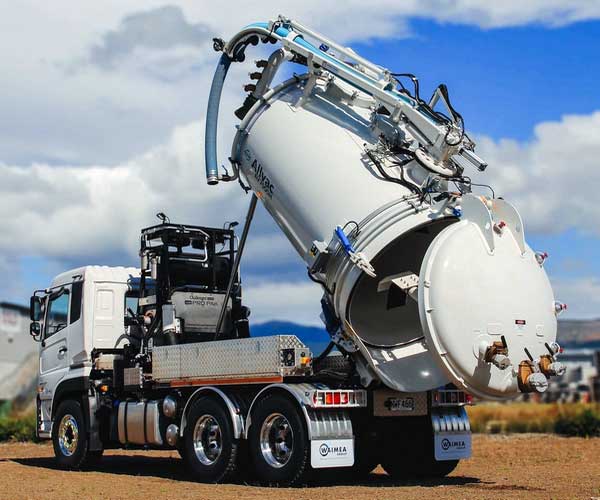
A hydraulic excavator is a specialized truck that uses high-pressure water combined with a powerful
vacuum system. The key components are the water hose and the suction hose. These two work together
to pulverize hard soil and debris, creating a slurry that is then sucked by the vacuum system into
a tank for disposal.
This technology enables non-destructive and precise digging, significantly reducing the risk of
damage to underground pipes such as fibre optic cables, gas pipes and sewer pipes.
| Feature | Hydro-Excavation | Dry Vacuuming |
| Method | High pressure water jets loosen the material, after which it is sucked up with a vacuum pump. | Pure pneumatic extraction collects dry materials using special filters. |
| The best for | Non-destructive excavation, exposing underground utilities and loosening frozen ground. | Collecting dry earth, sand, gravel, leaves, ash and powders. |
| Equipment | Integrated high-pressure water pump, large water tank, powerful vacuum blower. | High capacity vacuum pump, advanced filtration systems, cyclone separators. |
Referene(s)..
waimea.co.nz
satelliteindustries.com
kineticindustry.com
Conclusion.. Vacuum trucks are indispensable tools, offering unparalleled versatility and efficiency in handling fluids, waste and debris. In recent years, the industry has been shifting to more sustainable, automated, and high-quality technology to meet stringent safety and environmental standards. While operating costs and specialized training requirements for operators are high, and the initial cost of a truck is also significantly high, their role in maintaining infrastructure and ensuring safety makes them essential for operational continuity in the construction, energy, and municipal sectors.
Related Post(s)