Motor-operated valves (MOVs) are industrial, electrically powered valves used
to automatically open, close, or throttle fluid flow in systems such as pipelines, HVAC, and power
generation. They consist of an electric motor, an actuator, and a valve body, often using limit
switches for precise remote control.
Motor-operated valves can be used with water or air in applications where valve
operation must be automated. The valves and actuators are designed for use in a wide range of applications,
including boilers, furnaces, heating equipment, and gas generators used in commercial and industrial
environments.
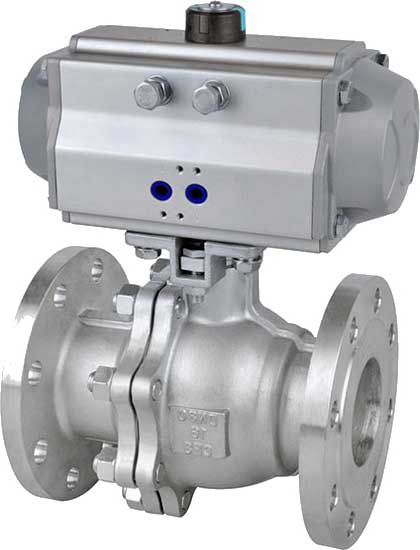 Motor-operated
Ball valve
Motor-operated
Ball valve
MOVs are used to solve a number of important problems..
- Remote control: MOVs are remotely controlled, which is crucial in hazardous or hard-to-reach
locations.
- Automation: MOVs are equipped with automated control systems and are opened and closed
based on preset parameters without human intervention.
- Precision: Electric motors offer more precise control over valve position compared to
manual operation.
How do motor-operated valves work?
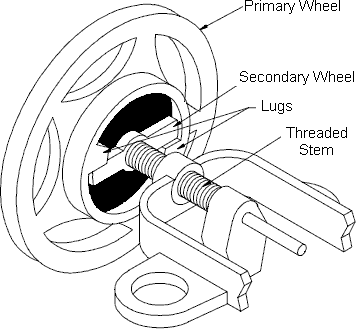
The mechanism of a motor-operated valve is fairly simple. The electric motor is connected to the
valve stem, the part that moves to open or close the valve. When the motor runs, it rotates the
stem, which moves the valve's closing mechanism (such as a gate, ball, or disc).
Some Key components are..
- Electric actuator: The electric actuator is the most important part of the MOV. It contains
the electric motor and converts electrical energy into mechanical torque to operate the valve.
- Valve body: The valve body is the main structure of the valve that contains the internal
components and allows the flow of liquid or gas.
- Valve stem: The valve stem connects the actuator to the internal mechanism of the valve
and transmits the torque from the actuator to open or close the valve.
- Gearbox: The gearbox is used to reduce the engine speed and increase the torque on the
valve stem.
- Limit switches: Limit switches are used to detect the position of the valve and stop
the motor when the valve reaches the fully open or fully closed position.
- Control system: The control system is responsible for controlling the operation of the
motor and valve. It can be a simple on/off switch or a more complex system with feedback and control loops.
Types of MOVs based on Valve type
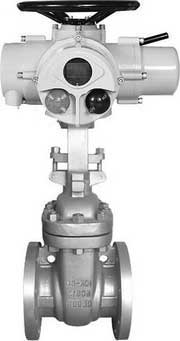
Motor-operated Gate valve
uses a gate that moves up and down to block or allow flow. These valves are suitable for on/off
control, but not for precise flow control. Typical pressure ratings range from 150 to 2500 PSI...
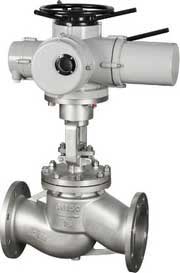
Motor-operated Globe valve
uses a disc that moves perpendicular to the flow path. Globe valves offer better flow control
than gate valves. Ideal for throttling flow in systems that need to start and stop frequently.
Widely used in power plants and HVAC systems...
Motor-operated Ball valve
uses a ball with a hole in it. When the hole is aligned with the pipe, flow can occur. Ball valves
provide a tight seal and are suitable for on/off control. They offer fast shut-off and minimal
pressure drop. They are widely used in oil and gas pipelines. They can withstand temperatures
from -50 °F to 400 °F...
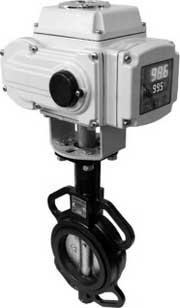
Motor-operated Butterfly valve
uses a rotating disc to regulate flow. Butterfly valves are lightweight and offer good flow control.
Cost-effective solution for large-diameter pipelines. Widely used in water treatment plants.
Sizes range from 2 inches to over 100 inches...
Types of MOVs based on Actuator type
- Quarter-turn actuator valves: These actuators rotate the valve stem 90 degrees.
Key features include fast operation and tight shut-off. They are often used with ball valves and
butterfly valves.
- Multi-turn actuator valves: These actuators rotate the valve stem more than 360 degrees.
They offer precise control and are often used with gate valves and globe valves.
- Linear actuator valves: These actuators move the valve stem in a straight line. They
are known for their high thrust and are often used with globe valves and gate valves.
- Electric actuator valves: This is a broad category, as all of the above actuator types
can be electrically powered. Electric actuators offer reliable and precise control.
- Smart actuator valves: These actuators incorporate advanced control systems and sensors.
They offer features such as remote monitoring, diagnostics, and precise positioning.
In summary
In industrial processes, the demand for reliable, efficient, and safe fluid control systems is
of paramount importance. Motor-operated valves offer numerous advantages, from precise control
and automation to enhanced safety measures and reduced wear.
MOVs offer a range of benefits that contribute to improving reliability and performance. Industries
continue to pioneer efficiency and safety, and motor operated valves play an important role in
shaping the future of fluid control systems.
Related Post(s)
Valve Actuators
Valve actuators are selected based upon a number of factors including torque necessary to operate
the valve and the need for automatic actuation...