
 |
Washers: are they necessary for a bolted flange connection? |
Opinions vary widely on whether or not to use washers under nuts in bolted flange connections, and this article tries to answer that question.
Standards such as ASME PCC-1 recommend the use of washers to improve torque accuracy, while other standards, such as ASME B31.3, state that they are not strictly required for standard steel piping.
Postings:
Posting one: Washers are essential for maintaining the integrity and performance of bolted joints. Although it is technically possible to create a functional connection between two flanges using only bolts and nuts, omitting washers can lead to premature wear, leaks, and costly maintenance issues.
The image below shows an example of a bolted flange connection with washers under the nuts.
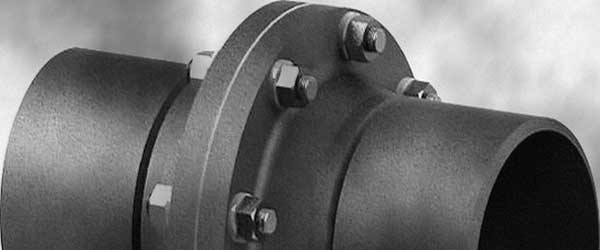
By distributing the load evenly, preventing surface damage, and reducing friction, (hardened) washers extend the service life of flanges, gaskets, and pipes and ensure a consistent seal. Hardened washers ensure that the tightening torque is converted into precise bolt tension.Hardened washers ensure that the tightening torque is converted into precise bolt tension.
Posting two: Flange nuts generally do not require a washer, because the flange itself acts as a washer.
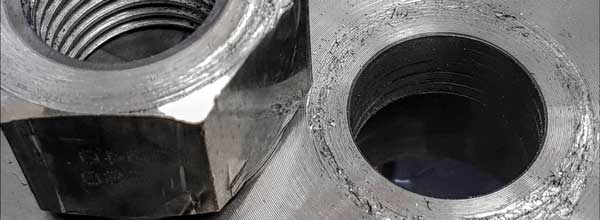
The image below shows an example of the flange surface where no washer was used under the nut.
Remark(s) of the Author...
The “need for washers” is described above, but that probably won’t get you very far.
The second image showing the damaged flange surface may be a reason to opt for the washer version, but
ultimately, the engineer will have to decide whether or not to use washers.
I could give many examples of situations where hardened washers offer significant advantages, but also
of flange connections without washers under the nuts that have been doing their job for years without
any problems.
My own opinion is less important, but for large equipment flanges, for example, I would opt for hardened
washers, which can significantly reduce friction during tightening, thereby also reducing the tightening
torque. “Normal” flange connections, with some exceptions—such as flange connections in high-pressure
and high-temperature systems and those handling critical media.
Lubrication
What is often underestimated is the proper lubrication of bolts, nuts, and washers; this plays a very
important role in creating a leak-free flange connection and minimizes damage to the flange surfaces.
Unfortunately, many people consider this to be of secondary importance, and in my opinion, the priorities
should therefore be more clearly defined in the work procedures.
Take your own car as an example: without lubrication, the engine will jam or suffer internal damage.
General: Lubrication with the correct product, suitable for the fasteners, will minimize damage
to the flange surface and have a very positive effect on the tightening torques.
Related Post(s)
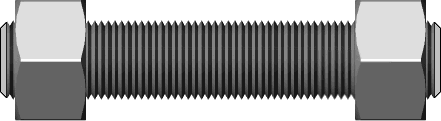
Stud Bolt length are defined in ASME B16.5 standard. The length in inches is equal to the effective thread length measured parallel to the axis, from the first to the first thread without the chamfers...