
Bailong Elevator
The Bailong Elevator, also known as the Hundred Dragons Ladder to Heaven, is a complex of three parallel, glass-clad elevators carved into the quartz cliffs of Zhangjiajie National Forest Park in Hunan Province, China.
The elevator serves as the primary vertical transport route to the higher viewpoints in the Yuanjiajie Area of the Wulingyuan Landscape and Historical Area. With a height of 326 meters (1,070 feet), the Bailong Elevator is recognized as the world's tallest open-air elevator. It is designed to transport tourists through the steep rock face while simultaneously offering panoramic views of the surrounding pillar like formations.
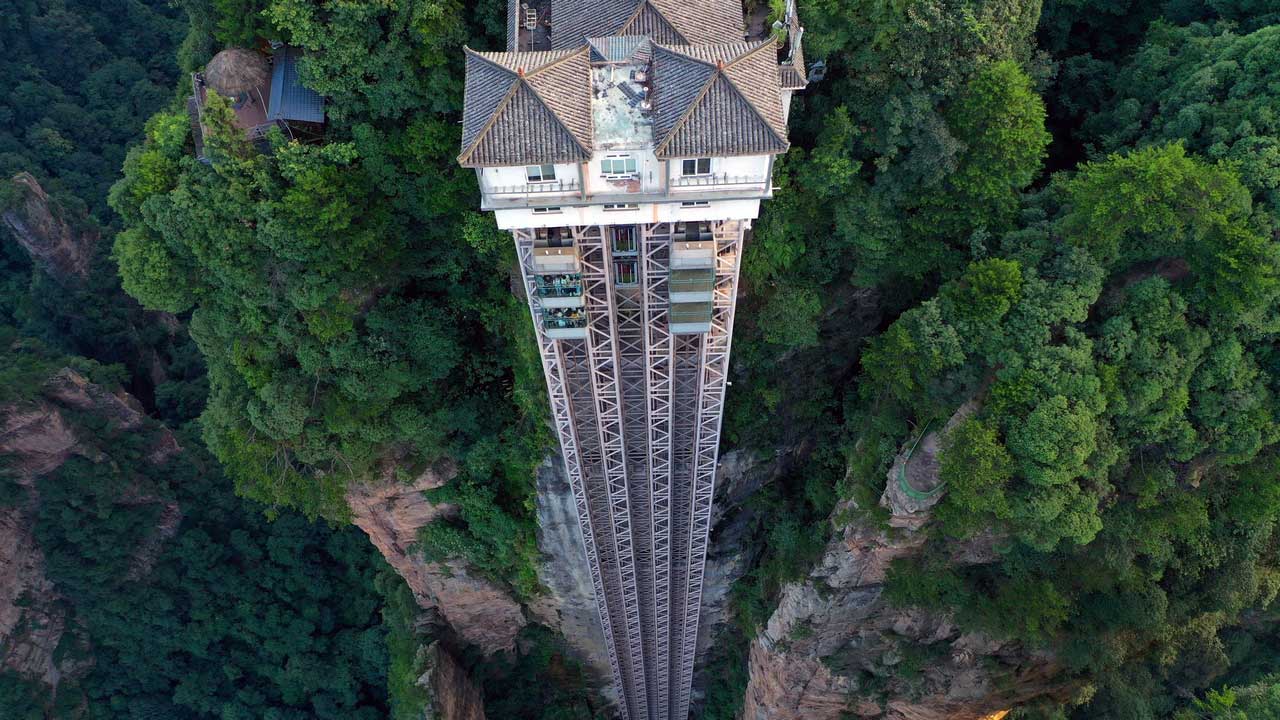
Construction began in October 1999, and the attraction opened to the public in 2002. Approximately 20 million dollars were invested to integrate the structure into the natural rock face as little as possible by utilizing three independent shafts.
To reach the top of a pillar without a two-hour hike, the elevator spans a height difference of 326 meters in one and a half minutes following an upgrade in 2015. On July 16, 2015, the elevator was recognized by Guinness World Records as the world's tallest open-air elevator and reportedly also as the fastest passenger elevator with the largest load capacity.
Structural Features
The Bailong elevator consists of three parallel, double decker glass cabins integrated into the quartz sandstone rock face. Each cabin features fully transparent glass walls and ceilings, providing passengers with an unobstructed panoramic view of the surrounding karst columns and dense forest during the ride.
This aesthetic choice prioritizes the visual experience and transforms the elevator into an architectural framework for the natural landscape, while structural integrity is ensured by reinforced glass panels.
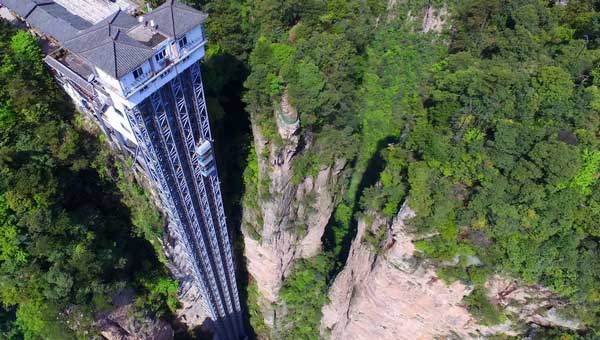
The overall framework rests on a steel skeleton anchored directly into the rock using bolted connections. The lower shafts are carved into the rock face for installation, and the upper sections protrude like visible cranes to follow the contours of the terrain. This method avoids extensive concrete foundations and distributes the load across the natural rock to achieve stability over a height difference of 326 meters.
The lightweight construction and precise integration into the rock illustrate how technical adaptations to the geological constraints of the site have been applied, minimizing visible changes to the rock profile. The operational elements include energy-efficient drive motors housed within the steel structure, ensuring the elevator is both functional and in harmony with the landscape, without relying on energy-intensive support systems.
Related Post(s)
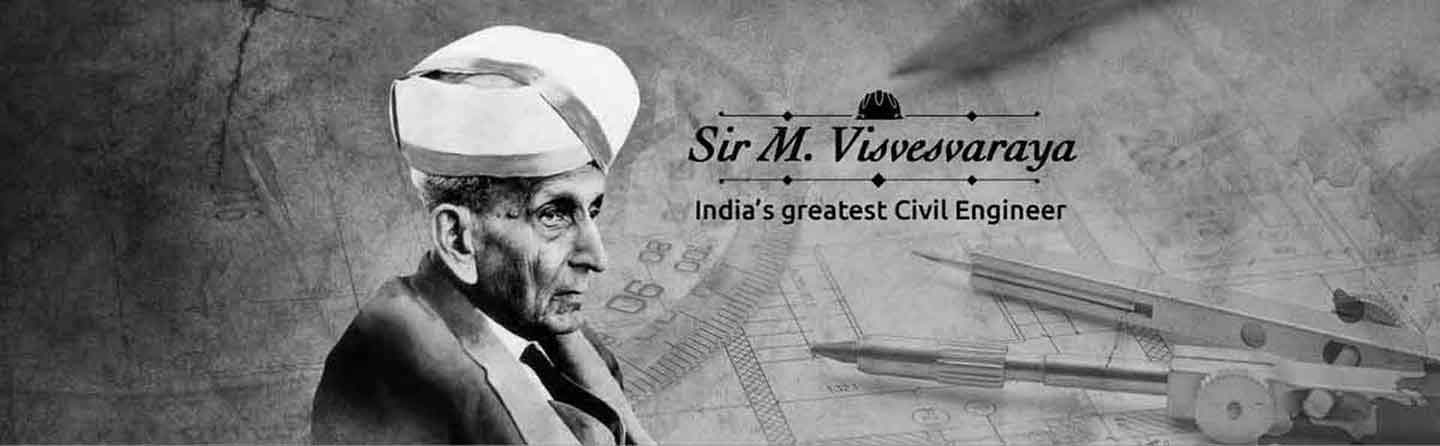
In remembrance of Sir Mokshagundam Visvesvaraya, the most outstanding Engineer of all times, the Engineering fraternity of India celebrates “Engineer's Day” every year on 15th of September...