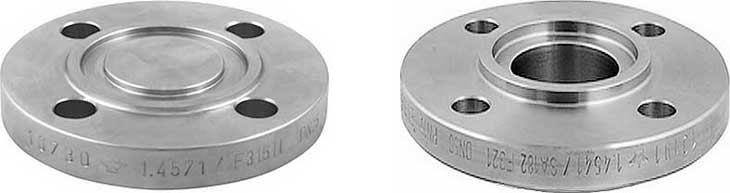
 |
B2220 flange standard |
JIS B2220 is the Japanese industrial standard for steel pipe flanges and defines dimensions, pressure ratings, materials, and marking requirements for flanges used in Japanese installations and numerous projects throughout Asia.
JIS flanges use a “K” classification system (.g., 5K, 10K, 16K, 20K, 30K, 40K, 63K, where the number roughly indicates the maximum working pressure in kgf/cm2 at ambient temperature. JIS B2220 flanges do not correspond to ASME B16.5, EN 1092-1, and other well known standards in terms of dimensions and some designs. Direct connection of an EU or ASME flange to a B2220 flange is generally not recommended.
| JIS Type | JIS Description | ASME B16.5 Equivalent |
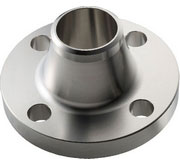
| WN | Welding neck flange | Weld Neck flange |
| SOP | Slip On plate flange | no alternative flange |
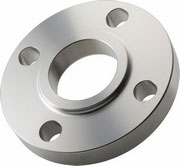
| SOH | Slip on hubbed flange | Slip On flange |
| SW | Socket welding flange | Socket Weld flange |
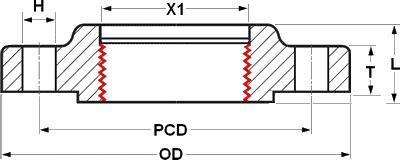
| TR | Threaded flange | Threaded |
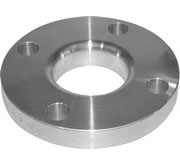
| LJ | Loose lap joint flange | no alternative flange |
| LJ | Lap Joint hubbed flange | Lap Joint flange |
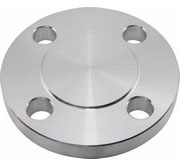
| BL | Blank flange | Blind flange |
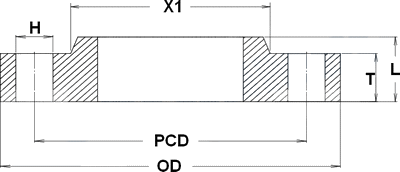
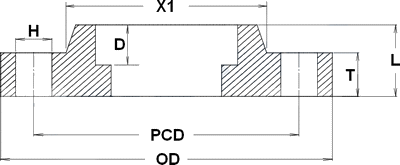
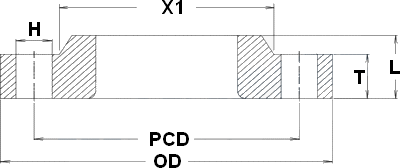
| X and X1 dimensions see JIS pipes | ||
The JIS B2220 standard specifies various flange face designs, such as raised face, flat face, tongue and groove, and male and female. The dimensions of the flange face depend on the diameter and the pressure class (K) of the flange.
The JIS B2220 standard also specifies the scale for the raised face profile and height in relation to the pressure class. Higher pressure classes (e.g. (20K or 30K) often use specific male female face variants to withstand enormous forces without leakage.
Furthermore, the JIS B2220 standard describes two raised face types: RF large and RF small, which refers to the surface pressure ( pressure = force / area ) that must be applied to achieve a leak free flange connection.
Diameter and height of the Raised Face will be shown as soon as possible.
The most commonly used flange surfaces are..
Raised Face design
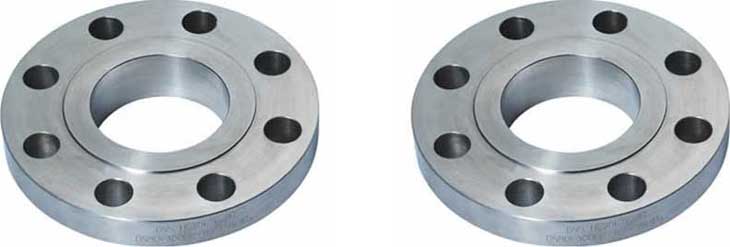

Raised Face flanges (RF) are the most common type of flange face. This flange is so named because there is a raised surface above the bolt circle where the gasket is placed. These flanges are widely used in oil and gas pipelines and are suitable for both high and low temperatures and pressures.
The main purpose of the RF flange is to concentrate the contact pressure on the gasket surface, resulting in a stronger seal. The height is defined by the pressure class, and the diameter depends on the flange dimensions.
Flat Face design
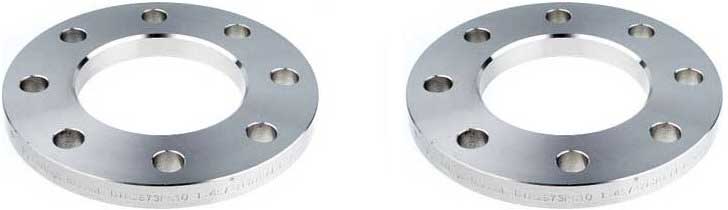

Flat Face flanges (FF) do not have a raised flat surface, but a gasket surface that lies in the same plane as the bolt circle surface.
The purpose of a flat flange is to prevent the bending motion that occurs when the bolts are tightened. Flat face flanges are often used in low-pressure, low-temperature applications, such as in water treatment plants.
Note..
All flanges mentioned here can be of the Raised Face, Flat Face, or other types, with the exception
of the Lap Joint flange. The Lap Joint flange (also called a backing flange) is slid over a
so-called Stubend, which is provided with its own Raised Face, enabling a connection with a counterpart.
Weld Neck (RF)
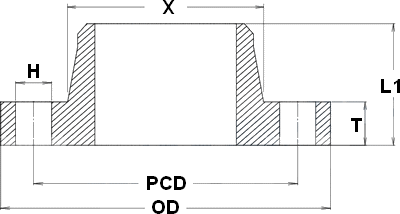
Slip On (FF)
Socket Weld (FF)
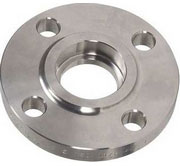
Lap Joint
Threaded (RF)
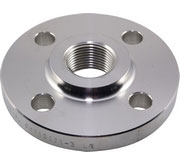
Blind (RF)
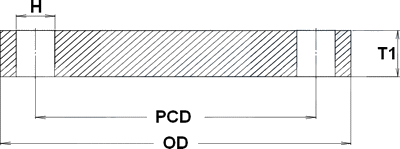
All materials have a JIS standard number to which the material number, also known as the material symbol, is linked.
The most commonly used materials in the production of JIS B2220 flanges are carbon steel, stainless steel, duplex steel, and nickel alloys.
Some other quality and material standards are described below, in the form of the more well known ASTM and API standards.
Carbon steel flanges JIS B2220:
Stainless Steel JIS B2220 Flanges:
Alloy Steel JIS B2220 Flanges:
Duplex Steel JIS B2220 Flanges:
Nickel Alloy JIS B2220 Flanges:
The material standards described above originate from various reliable suppliers and are not JIS descriptions. However, JIS uses its own material standards with its own designations and symbols. For the general public, it has been decided for the time being to describe the better‑known ASTM and API standards for the material description.
Related Post(s)