|
Check valves |
Check valves are automatic valves that open with forward flow and close with backward flow. A common other name for Check valve is Non Return Valve (NRV).
The pressure of the fluid passing through a system opens the valve, while any reversal of flow will close the valve. Exact operation will vary depending on the type of Check valve mechanism. Most common types of Check valves are swing, lift (piston and ball), butterfly, stop and tilting-disk.
A basic swing Check valve consists of a valve body, a bonnet, and a disk that is connected to a hinge. The disk swings away from the valve-seat to allow flow in the forward direction, and returns to valve-seat when upstream flow is stopped, to prevent backflow.
The disc in a swing type check valve is unguided as it fully opens or closes. There are many disk and seat designs available, in order to meet the requirements of different applications. The valve allows full, unobstructed flow and automatically closes as pressure decreases. These valves are fully closed when flow reaches zero, in order to prevent backflow. Turbulence and pressure drop in the valve are very low.
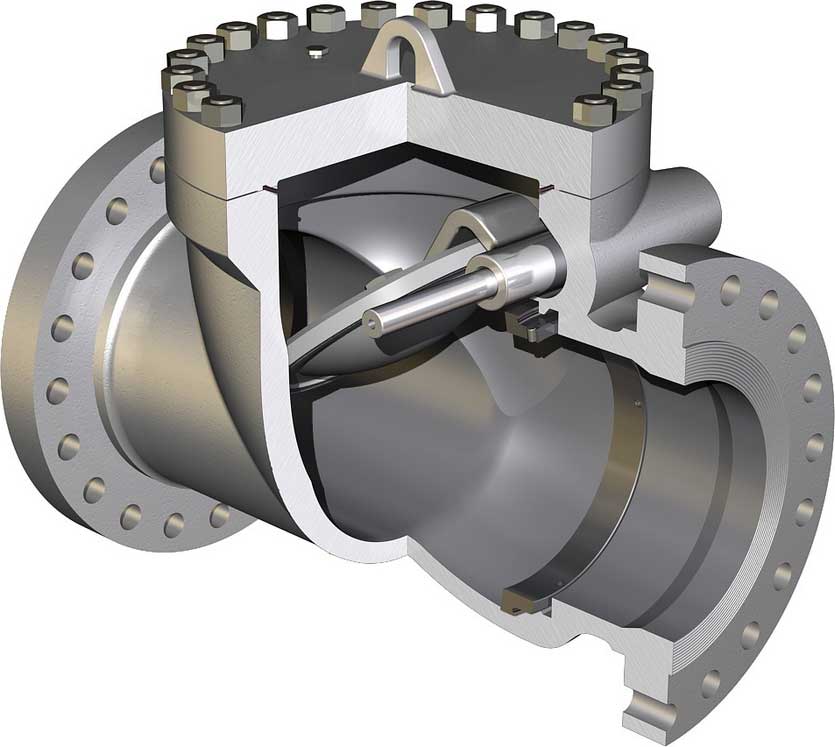 Image..
Swing Check valve (Cameron Intl Corp.)
Image..
Swing Check valve (Cameron Intl Corp.)The seat design of a lift-check valve is similar to a globe valve. The disc is usually in the form of a piston or a ball.
Lift check valves are particularly suitable for high-pressure service where velocity of flow is high. In lift check valves, the disc is precisely guided and fits perfectly into the dashpot. Lift check valves are suitable for installation in horizontal or vertical pipe-lines with upward flow.
Flow to lift check valves must always enter below the seat. As the flow enters, the piston or ball is raised within guides from the seat by the pressure of the upward flow. When the flow stops or reverses, the piston or ball is forced onto the seat of the valve by both the backflow and gravity.
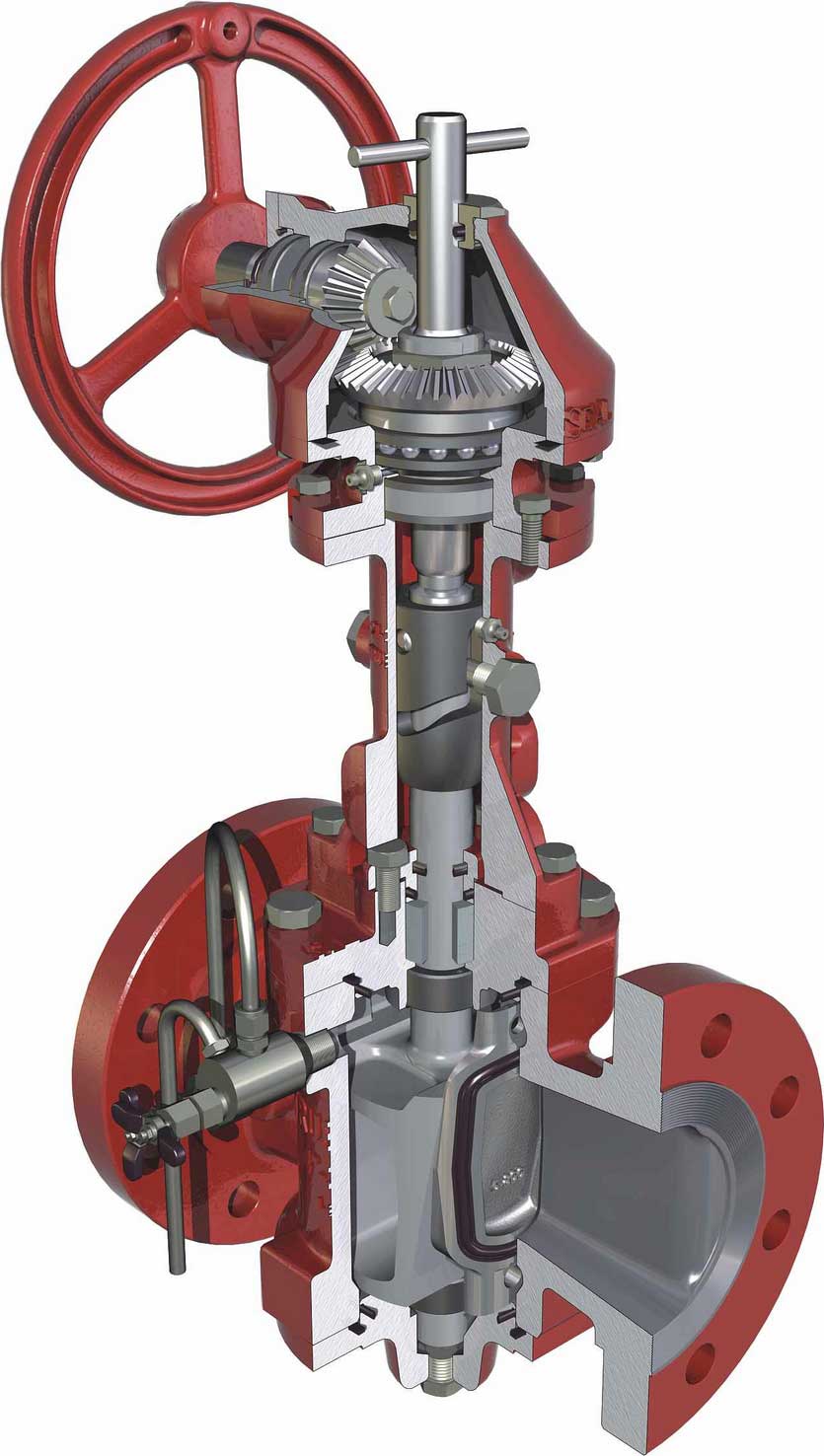
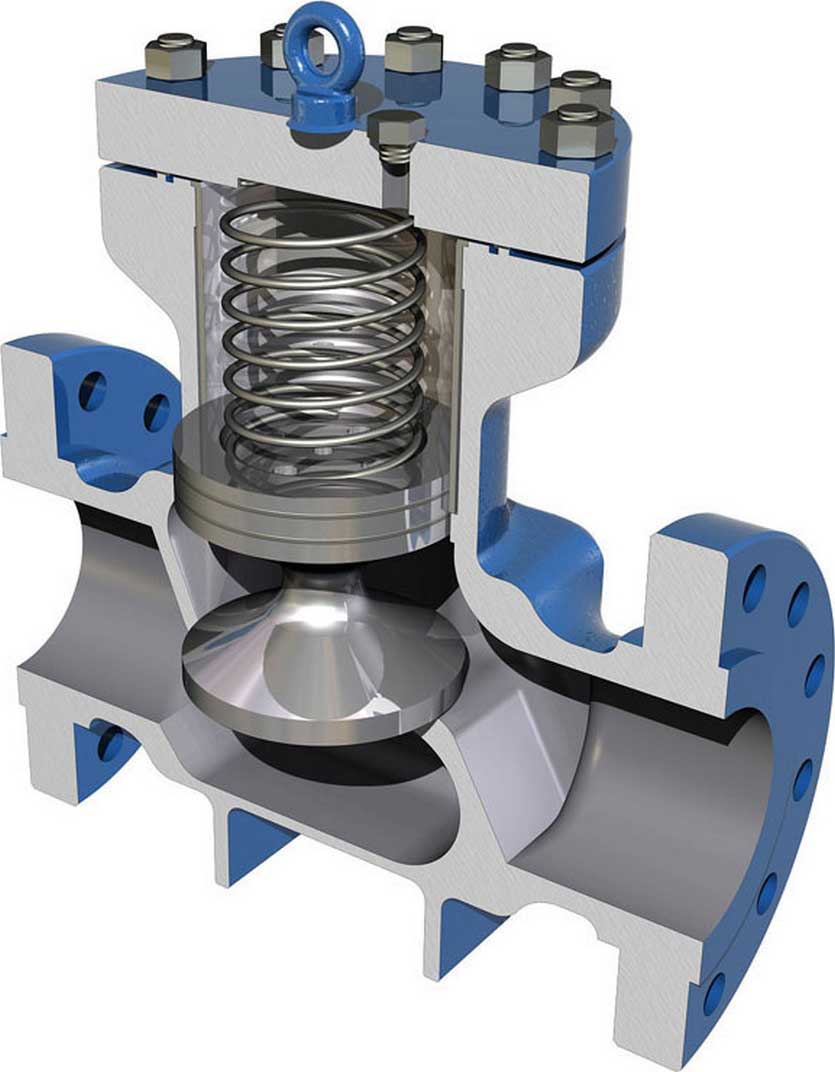 Image..
Lift Check valve (Cameron Intl Corp.)
Image..
Lift Check valve (Cameron Intl Corp.)A typical ball check valve consists of a spring-loaded ball that presses against a seat in the valve body. When pressurized fluid flows in one direction, it pushes the ball against the spring, causing the ball to rise and allowing fluid to flow through. However, if fluid flows in the opposite direction without pressure, the ball drops down or against the seat due to the spring force, sealing the flow opening.
In addition to the spring force, the ball has a slightly larger diameter than the seat/flow opening. Furthermore, the valve seat tapers conically to guide the ball properly and ensure a good seal. These properties ensure that the valve operates efficiently with a simple design. Due to the valve's operation, the pumping capacity must always be sufficient to overcome the spring stiffness. If the pumping capacity decreases, a smaller ball or a spring with lower stiffness must be used.
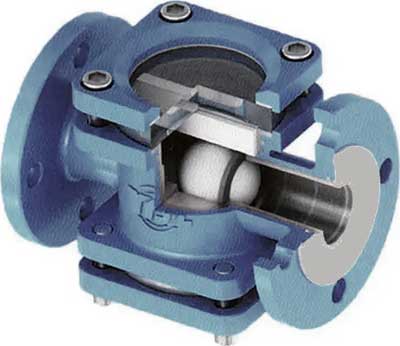 Image..
Ball Check valve (source unknown)
Image..
Ball Check valve (source unknown) Butterfly Check valves and swing Check valves are primarily similar, but they differ significantly in structure, suitable applications, connection methods, and installation flexibility.
Both Butterfly Check valves and Swing Check valves have their own construction. Butterfly Check valves feature a disc connected in the center by a pivot point, allowing them to open and close quickly during fluid flow. This makes them suitable for high-flow applications.
Swing Check valves, on the other hand, rotate around a pivot point on the valve seat, where the pivot point is located at the edge of the disc. This results in lower flow resistance, making them ideal for medium to small pipes.
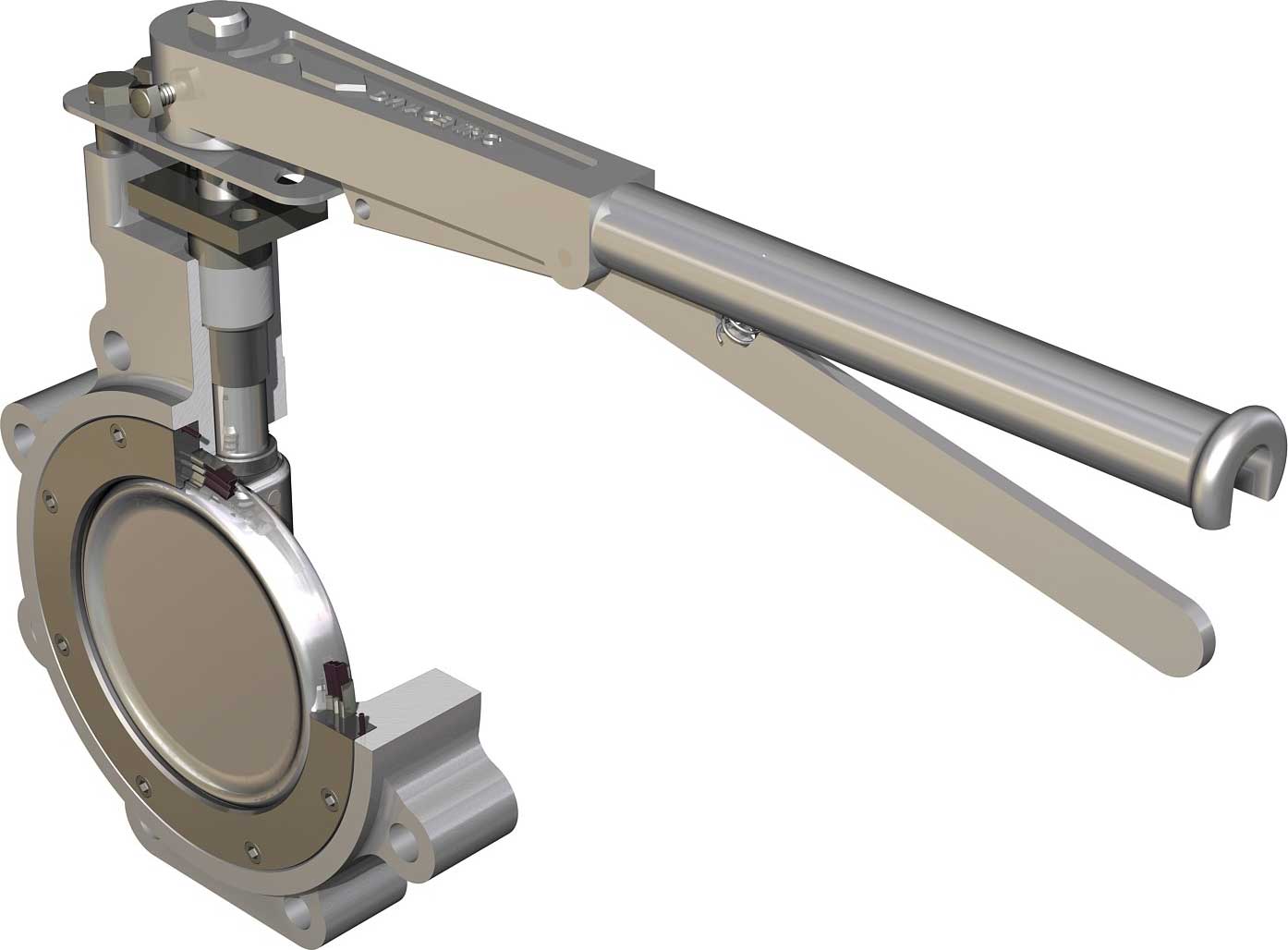
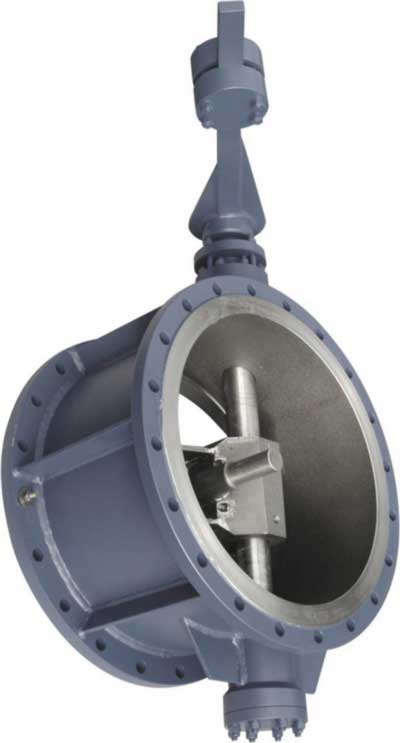 Image..
source unknown
Image..
source unknownStructural Features of a Butterfly Check Valve
Disc Design: The disc is circular and is typically located in the center of the valve body. It is connected by a pivot point that runs through the center of the disc and is situated in the flow path. This design ensures that the disc opens or closes quickly when the flow direction changes, effectively preventing backflow.
Slow-Close Function: Due to the significant inertia of the disc, Butterfly Check Valves are often equipped with a slow-close function to reduce water hammer and thus ensure the integrity and safety of the piping system. They are particularly suitable for environments with high flow and low pressure.
Wafer Check valves are known for their compact, lightweight, and space-saving design. As the name suggests, these valves (without flanges) are designed to fit snugly between two flanges, making them an excellent choice for systems where space is limited. Despite their slim profile, Wafer Check valves are highly effective at preventing backflow at moderate flow rates. They are widely used in applications such as cooling water systems, low-pressure pipelines, and compact machinery.
One of the key features of Wafer Check valves is their cost-effectiveness. They are not only affordable but also easy to install, making them a popular choice for companies looking to optimize their processes without compromising on performance. Furthermore, their streamlined design minimizes pressure drop, which improves energy efficiency and reduces operating costs in the long run.
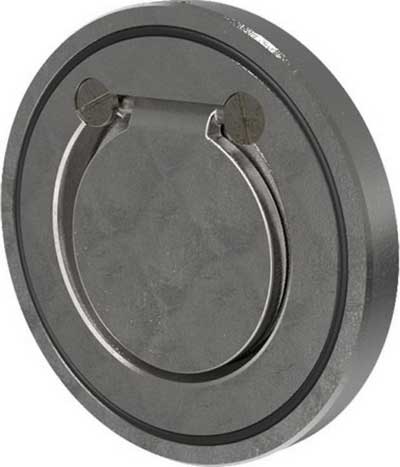 Image..
source unknown
Image..
source unknownThe images from (Cameron Intl Corp.) are used with permission from Cameron International Corporation, which retains all rights to the images.
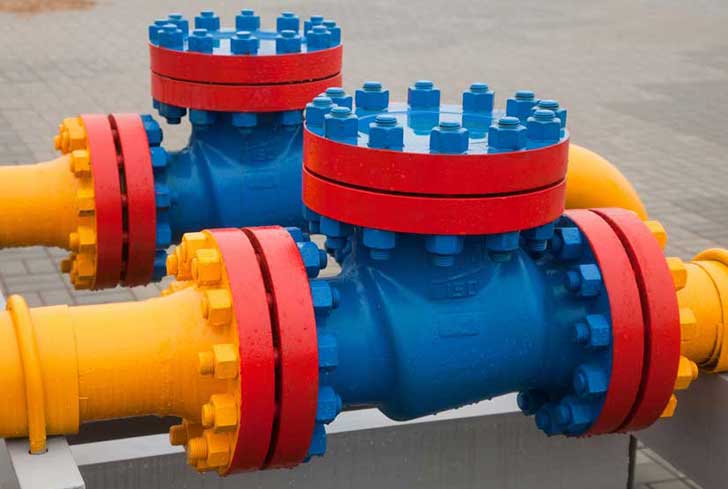

Pressure difference: The difference in pressure between the inlet and outlet sides of the valve, which drives the operation of the valve. A sufficient pressure difference is required to overcome the opening pressure and open the valve.
Opening pressure: The minimum pressure difference required to open the valve and enable forward flow. This specific opening pressure ensures that the valve remains closed until the system pressure reaches a level sufficient to open the valve.
Back pressure: The pressure exerted in the opposite direction that helps close the valve. Sufficient back pressure ensures that the valve closes quickly to prevent backflow.
Inlet pressure: The pressure of the fluid entering the valve. The inlet pressure must be higher than the opening pressure to open the valve.
Sealing: Ensures that the valve closes completely and prevents backflow. A good seal is crucial for maintaining system integrity and preventing contamination. Flow direction: Indicated by an arrow on the valve body, which ensures correct installation for one-way flow. The correct flow direction is essential for proper valve operation.
Valve seat: The surface against which the valve disc or ball seals to prevent backflow. The valve seat must be smooth and free of dirt to ensure a good seal.
Spring-loaded Ball: Some Ball Check valves contain a spring mechanism to improve the seal. The spring ensures that the ball returns quickly to the seat, allowing for a faster response to backflow.
In summary, check valves are not simply basic mechanical devices that allow fluids to flow in only one direction. They have a rich history and play an important role in the operation of various industries.
From their earliest forms, such as flaps made from leather or animal skin, check valves have come a long way. Today's advanced designs bear witness to human ingenuity and our continuous search for better solutions.
Check valves fulfill an important function. They help prevent backflow and protect equipment from damage caused by reverse fluid flow. Without them, many industrial processes would be impossible or unsafe.
LARGE IMAGES OF VALVES