
 |
Lifting and Rigging Parts |
Lifting and Rigging Parts refers to a wide range of devices used to lift and move heavy objects.
This type of Parts is indispensable in numerous sectors, including industrial construction, mining, and transportation. Lifting and Rigging Parts includes Shackles, Hooks, Turnbuckles, Eye bolts, Eye nuts and much more.
Thorough training and proper maintenance are essential when using lifting and rigging Parts to ensure safe and effective operation.
Types of Lifting and Rigging Parts
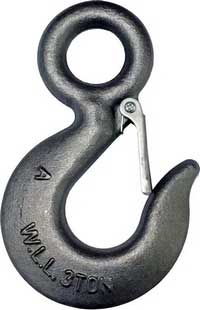
A Lifting Hook for chain slings is a sturdy steel component attached to the end of a heavy-duty
chain sling. This hook has a wide opening and is equipped with a safety latch or a self-locking mechanism
to securely fasten and lift heavy loads using cranes or hoists.
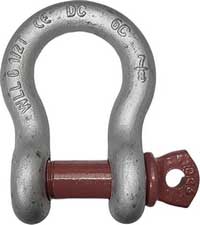
A Shackle is a U-shaped or horseshoe-shaped metal connector that is secured with a separate
pin or bolt. It is used to quickly, securely, and safely fasten objects such as ropes, cables, chains,
or loads together.
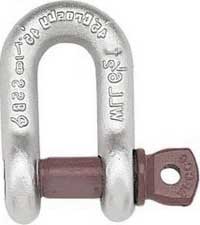
A D Shackle is similar to a horseshoe, that is secured with a separate
pin or bolt. It is used to quickly, securely, and safely fasten objects such as ropes, cables, chains,
or loads together.
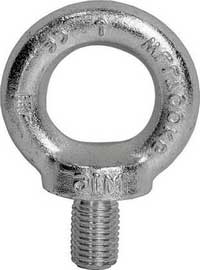
An Eye Bolt is a threaded metal fastener with a round loop (the “eye”) at one end and
a threaded shank. It provides a secure anchor point for attaching ropes, cables, chains, or hooks for
lifting, hoisting, and pulling heavy loads.
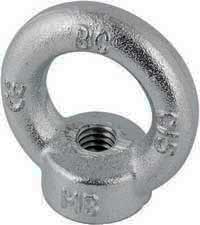
An Eye Nut is a special fastener with a metal head shaped like a loop and an internal (female)
thread. It is screwed onto an existing threaded bolt or rod to create a secure attachment point for hooks,
ropes, or chains.
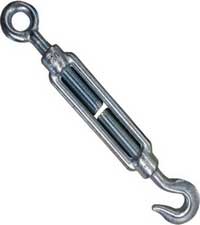
A Turnbuckle, also known as a stretching screw or bottle screw, is defined as “a device for
adjusting the tension or length of ropes, cables, tie rods and other tensioning systems.” Although this
piece of hardware has very compact dimensions, but with larger dimensions, it can be used for equipment
setups and can withstand huge weights.
The lifting parts described in this article are commonly used, but suppliers of lifting equipment can likely come up with other types and designs.
Related Post(s)
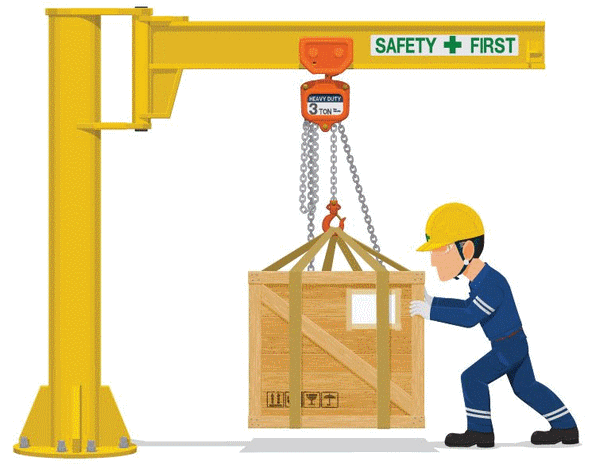
Operating cranes
To ensure your own safety while lifting, you obviously make sure you have the proper personal protective equipment. In addition, you choose a safe and strategic position in relation to the crane or hoist, and the workload...
To ensure your own safety while lifting, you obviously make sure you have the proper personal protective equipment. In addition, you choose a safe and strategic position in relation to the crane or hoist, and the workload...