
 |
Differences between Lifting and Rigging |
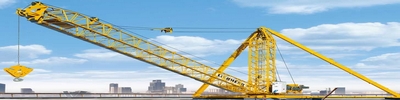
Lifting and rigging are often used interchangeably, but they refer to distinct stages
in a crane operation. Lifting involves the actual raising and lowering of loads, while rigging focuses
on the intricate process of preparing and securing those loads for safe and efficient lifting.
Lifting is the action, and Rigging is the preparation
Industry terminology: In cranes and overhead cranes, the equipment is often divided into above‑the‑hook equipment (the lifting mechanism that provides the movement and force) and below‑the‑hook equipment (the load handling equipment attached to the hook). This classification helps to separate the lifting system from the rigging system that connects and controls the load.
The Lifting Process
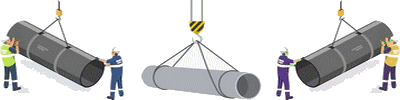
Lifting is the raising or lowering of heavy objects. This phase involves the use of cranes or other lifting equipment.
Positioning the Load
Before lifting, it is crucial to position the load correctly. This means that the load must be balanced
and securely fastened to prevent swaying or instability during lifting.
Attaching the Load
The load is attached to the crane hook using suitable lifting materials, such as slings, chains, or hooks.
Correct attachment is essential to distribute the weight of the load evenly and prevent accidents.
Execution of the Lift
Once the load is securely attached, the crane operator carefully lifts it to the desired location, where
the operator's skill and precision play a crucial role in this phase.
The Rigging Process
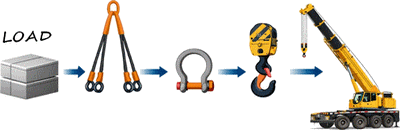
Lifting a load involves the preparatory work that ensures the load is ready to be lifted. It includes selecting the appropriate lifting equipment and configurations to safely secure and stabilize the load during lifting.
Selection of Rigging Equipment
Choosing the right slings, shackles, hooks, and other lifting materials is essential. The weight, shape,
and center of gravity of the load must be taken into consideration to determine the appropriate equipment.
Assessment of the Load
Rigging experts assess the characteristics of the load, including weight, dimensions, and vulnerability.
This assessment helps determine the safest and most efficient rigging configuration.
Rigging Plan
A detailed rigging plan is drawn up, describing the rigging configuration, attachment points, crane lifting
capacity, and the sequence of operations. This plan ensures that everyone involved in the operation understands
their role and the safety measures to be taken.
Load securing
Rigging professionals carefully secure the load using the selected equipment, in accordance with the
specifications of the rigging plan. By properly securing the load, it is prevented from shifting, swinging,
or falling during lifting.
Related Post(s)
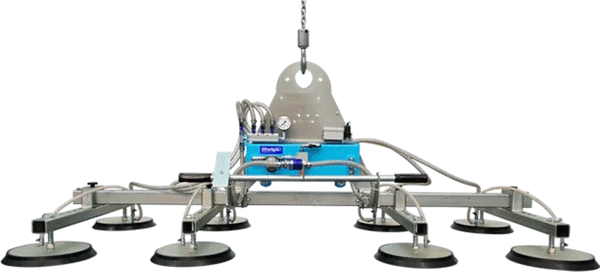
From heavy steel plates to delicate glass panels, vacuum lifters simplify tough material handling tasks. They are an indispensable tool...