Pipeline Personnel Qualification (OQ) is a regulatory requirement designed
to ensure that individuals performing covered tasks on pipelines are qualified, capable of recognizing,and
able to react to abnormal operating conditions (AOCs). The industry standard ASME B31Q provides
the framework for identifying these tasks, evaluating personnel and managing qualifications.
The ASME B31Q Task List courses are specialized training and assessment programs
designed to meet the requirements for the qualification of pipeline operators. These courses are offered
by various providers and cover over 100 specific tasks, including corrosion protection, pressure testing,
valve maintenance and inspection and repair of piping systems. They include both computer-based training
and performance assessments.

ASME B31Q Courses: List of Tasks
ASME-0001 Measure Structure -to-Electrolyte Potential
The course covers the knowledge required to perform tests in the field of cathodic protection, including
an overview of cathodic protection systems and testing equipment, as well as the procedure for measuring
the potential difference between the structure and the electrolyte. Abnormal operating conditions are
also addressed.
ASME-0011 Conduct Close Interval Survey
The course explains the purpose of a short-range measurement, as well as the preparations for the measurement
and the steps involved in performing it, including measuring the potential differences between the structure
and the ground and recording log data. Abnormal operating conditions are also discussed.
ASME-0021 Measure Soil Resistivity
The course covers methods for measuring soil resistance, the appropriate measuring equipment and tools,
suitable measurement locations, how to measure soil resistance and record data, and abnormal operating
conditions that may arise during this task.
ASME-0031 Inspect and Monitor Galvanic Ground Beds/Anodes
The course explains how to inspect and monitor cathodic protection systems and anodes by verifying the
test location, measuring the potential differences between the structure and the electrolyte, analyzing
the remaining service life of the anodes, and documenting the results. It also addresses abnormal operating
conditions that may arise.
ASME-0041 Installation and Maintenance of Mechanical Electrical Connections
The course explains how to install mechanical and electrical connections, how to inspect test equipment,
how to perform maintenance on damaged test leads, and how to check mechanical integrity and electrical
continuity. It also addresses abnormal operating conditions that may arise.
ASME-0051 Installation of Exothermic Electrical Connections
The course explains why electrical connections are installed, covers the knowledge required before making
exothermic welded joints, describes the steps and equipment needed to perform exothermic welded joints,
and lists potential abnormal operating conditions that may arise during installation.
ASME-0061 Inspect or Test Cathodic Protection Bonds
The course explains the purpose of cathodic protection connections, as well as the different types of
connections, the use of shunts, the inspection and testing procedures, and how to identify and respond
to unusual operating conditions that may arise during inspection or testing.
ASME-0071Inspect or Test Cathodic Protection Electrical Isolation Devices
The course explains the purpose of electrical isolation devices, as well as their locations and types,
and the procedures for inspecting and testing them, and addresses unusual operating conditions that may
arise during the inspection or testing of electrical isolation devices for cathodic protection.
ASME-0081 Install Cathodic Protection Electrical Isolation Devices
The course describes the purpose of installing electrical disconnecting devices, the required knowledge
and skills, the procedures for installing various electrical disconnecting devices, and any unusual operating
conditions that may arise during the process.
ASME-0091 Troubleshoot Active Cathodic Protection System
The course explains the purpose of troubleshooting and resolving faults in cathodic protection systems.
In addition, the safety measures for this work are described, an overview of the necessary equipment
is provided, and the procedures for detecting and rectifying faults in rectifiers, grounding beds, cables,
and metal contact points are explained. The document also addresses unusual operating conditions that
may arise during the detection and rectification of faults in the system.
ASME-0101 Inspect Rectifier and Obtain Readings
The course discusses the role of a rectifier in cathodic protection and describes the procedure for inspecting
a rectifier. It explains how to read the output voltage and current values of a rectifier and how these
values can be used to verify that the rectifier is functioning properly. The procedure includes information
on measuring voltage, calculating current, validating measured values to confirm that the rectifier is
operating as expected, and documenting the data. It also discusses abnormal operating conditions that
may occur.
ASME-0111 Maintain Rectifier
The course discusses the role of a rectifier in cathodic protection and describes the procedure for performing
maintenance on the rectifier. The procedure includes troubleshooting the rectifier, repairing the rectifier
by replacing defective parts, performing fine and coarse adjustments of the tap settings, and documenting
maintenance on the rectifier. The course also describes how to recognize and respond to abnormal operating
conditions.
ASME-0141 Visual Inspection for Atmospheric Corrosion
The course explains the purpose of visual inspections for atmospheric corrosion, illustrates the types
of coating failure, describes the procedure for visual inspections, and provides an overview of abnormal
operating conditions that may occur during an inspection.
ASME-0151 Visual Inspection of Buried Pipe and Components When Exposed
The course explains the purpose of the inspection; defines terms related to external corrosion, coatings,
coating defects, and coating methods; describes the inspection procedure; and addresses abnormal operating
conditions that may arise during the work.
ASME-0161 Visual Inspection for Internal Corrosion
The course covers various defects that may be identified during a visual inspection of the internal surfaces
of a pipe or component. The types of corrosion covered in the course include pitting corrosion, scale,
and microbiologically influenced corrosion (MIC). The course covers the basic steps of the inspection
process, including documenting the location of each defect. It also describes how to recognize abnormal
operating conditions that may arise and how to respond to them.
ASME-0171 Measure External Corrosion
The course describes various types of corrosion and explains the procedure for measuring external corrosion
on steel pipes. The procedure includes information on preparing the pipe surface, creating a paper template
of the pipe surface, applying a grid to corroded sections of the steel pipe, performing external corrosion
measurements, and documenting the findings. In addition, the course describes how to recognize abnormal
operating conditions and respond to them.
ASME-0181 Measure Internal Corrosion
The course describes various types of corrosion and explains the procedure for measuring internal corrosion
in steel pipes. The procedure includes information on preparing the pipe surface, performing internal
corrosion measurements, mapping the corrosion on the pipe surface, and documenting and reporting the
findings. In addition, the course describes how to recognize abnormal operating conditions that may occur
and how to respond to them.
ASME-0191 Measure Atmospheric Corrosion
The course covers the types and characteristics of atmospheric corrosion in above-ground pipelines, surface
preparation, equipment inspections, measurement methods, and unusual operating conditions that may arise
when measuring atmospheric corrosion.
ASME-0201 Visual Inspection of Installed Pipe and Components for MechanicalDamage
The course explains the purpose of visually inspecting installed piping for mechanical damage, the terminology
associated with mechanical damage, how to perform a visual inspection of installed piping and components
for mechanical damage, and how to identify and respond to any unusual operating conditions while carrying
out the procedure.
ASME-0211 Measure and Characterize Mechanical Damage on Installed Pipe andComponents
The course explains the purpose and procedure for measuring and characterizing mechanical damage, defines
terms related to mechanical damage, discusses the necessary tools and documentation requirements, and
describes unusual operating conditions that may arise during the inspection.
ASME-0221 Inspect, Test and Maintain Sensing Devices
The course covers the various types of measuring equipment, as well as the procedure for conducting a
visual inspection, testing with the appropriate test equipment, recalibrating the measuring range and
set point of a measuring device, and abnormal operating conditions that may arise while performing the
task.
ASME-0231 Inspect, Test and Maintain Programmable Logic Controllers (PLC)
The course explains how to check the test equipment, visually inspect PLCs for damage, isolate them,
test them for proper operation, perform maintenance as needed, and put them back into service. It also
covers abnormal operating conditions that may arise while performing this task.
ASME-0241 Inspect, Test and Maintain Liquid Leak Detection Flow Computers
The course examines how flow meters and other devices are connected to flow computers as part of a CPM
system designed to detect leaks in pipelines. It covers the inspection, testing, and maintenance of these
systems, as well as abnormal operating conditions that may arise during these procedures.
ASME-0271 Prove Flowmeters for Hazardous Liquid Leak Detection
The course covers the use of reference meters and conventional displacement meters for calibrating flow
meters used to detect leaks of hazardous liquids. The displacement meters covered include unidirectional,
bidirectional, and compact meters. The course also addresses abnormal operating conditions that may arise.
ASME-0281 Maintain Flowmeters for Hazardous Liquid Leak Detection
This course discusses the various types of flow meters, including orifice plate, turbine, displacement,
Coriolis, ultrasonic, magnetic, and vortex flow meters. The steps for flow meter maintenance, such as
repair and disassembly, are also covered. Additionally, you will learn how to respond to abnormal operating
conditions that you may encounter during flow meter maintenance.
ASME-0291 Inspect, Test, and Maintain Gravitometers/Densitometers for Hazardous
Liquid Leak Detection
The course describes the qualifications and knowledge required for inspecting and testing these devices,
the initial inspection, maintenance procedures, and how to put the instruments back into service. Possible
deviating operating conditions are also discussed.
ASME-0301 Manually Opening and Closing Valves
The course covers the manual operation of valves using tools and by manually operating actuators. It
addresses work preparation, the effects of pressure changes resulting from manual operation, and abnormal
operating conditions that may arise during the work.
ASME-0311 Operate Valves Manually to Adjust Flow/Pressure and Monitor for Changes
The course explains how to prepare for the manual operation of valves and outlines the procedures for
regulating and monitoring flow or pressure. The course covers various types of valves, such as gate valves
and ball valves; manual and mechanical operating methods for making adjustments; how to verify that the
intended flow or pressure is achieved; and how to monitor whether flow and pressure remain within acceptable
limits. The course also describes how to document tasks and how to recognize and respond to abnormal
operating conditions.
ASME-0321 Valve Corrective Maintenance
The course explains how to prepare for corrective maintenance on valves and discusses the types of maintenance
that may need to be performed, such as carrying out repairs, replacing parts, flushing the valve, making
adjustments, and lubricating the valve. In addition, the course explains how to document corrective maintenance
on valves and how to identify and respond to abnormal operating conditions.
ASME-0331 Valve - Visual Inspection and Partial Operation
The course describes the purpose of visual inspection and partial operation of valves in pipelines, explains
how to visually inspect and partially operate valves, discusses how to perform routine lubrication of
valves, and lists abnormal operating conditions that may arise while performing the task.
ASME-0341 Perform Valve Preventive Maintenance
This course describes how to prepare for valve preventive maintenance and explains the steps that may
be required for the maintenance, such as inspecting and replacing the spindle packing, winterizing valves,
injecting a corrosion inhibitor, injecting a valve sealant/flushing agent, and lubricating the valve.
The course also describes how to document valve preventive maintenance and how to recognize and respond
to abnormal operating conditions.
ASME-0351 Pneumatic Actuator/Operator Inspection and Testing, Preventive andCorrective
Maintenance
The course explains how to perform a visual inspection, implement preventive and corrective measures,
adjust settings, and conduct a performance test on drives and control mechanisms. It also addresses abnormal
operating conditions that may arise during the task.
ASME-0361 Electric Actuator/Operator Inspection and Testing, Preventive andCorrective
Maintenance
The course explains how to perform a visual inspection, implement preventive and corrective measures,
adjust settings, and conduct a performance test on drives and control mechanisms. It also addresses abnormal
operating conditions that may arise during the task.
ASME-0371 Hydraulic Actuator/Operator Inspection and Testing, Preventive and
Corrective Maintenance
The course explains how to perform a visual inspection, implement preventive and corrective measures,
adjust settings, and conduct a performance test on drives and control mechanisms. It also addresses abnormal
operating conditions that may arise during the task.
ASME-0381 Spring-Loaded, PressureRegulating Device - Inspection and Testing,Preventive
and Corrective Maintenance
The course explains why control equipment must be inspected and maintained; describes how it should be
inspected, tested, and maintained; and discusses how to recognize and respond to abnormal operating conditions
that may arise during work.
ASME-0391 Pilot-Operated, PressureRegulating Device - Inspection, Testing,Preventive
and Corrective Maintenance
The course explains the purpose of inspecting and maintaining pressure regulators; describes how pressure
regulators with pilot valves should be inspected, tested, and maintained; and discusses how to recognize
and respond to abnormal operating conditions that may arise while performing the task.
ASME-0401 Controller-Type, PressureRegulating Device - Inspection, Testing,Preventive
and Corrective Maintenance
The course explains the purpose of inspections and maintenance; describes how controller-type control
equipment should be inspected, tested, and maintained; and discusses how to recognize and respond to
abnormal operating conditions that may arise while performing the task.
ASME-0411 Spring-Loaded, PressureLimiting and -Relief Device - Inspection,Testing,
Preventive and Corrective Maintenance
The course explains the purpose and steps involved in inspecting a relief valve, describes preventive
and corrective maintenance, and discusses how to identify and respond to abnormal operating conditions
that may arise while performing the task.
ASME-0421 Pilot-Operated, PressureLimiting and -Relief Device - Inspection,Testing,
Preventive and Corrective Maintenance
The course explains the purpose and steps involved in inspecting a relief valve, describes preventive
and corrective maintenance, and addresses unusual operating conditions that may arise while performing
the task.
ASME-431 Inspect, Test, and Maintain Pneumatic-Loaded, Pressure-Limiting, or
Pressure-Relief Device
The course explains the purpose and steps for inspecting a relief valve, describes preventive and corrective
maintenance, and discusses how to recognize and respond to abnormal operating conditions that may occur
during the task.
ASME-0551 Explosive Atmosphere Detection and Alarm System Performance Testand
Corrective Maintenance
The course explains the purpose of the detection and alarm system and discusses how the system can be
visually inspected, current measurements checked, and a system performance test carried out. It also
covers corrective maintenance steps and describes abnormal operating conditions that may occur during
operations.
ASME-0561 Pressure Test: Nonliquid Medium - MAOP Less Than 100 psi
The course explains how to test a pipeline with a maximum allowable operating pressure (MAOP) of less
than 100 psi using a non-fluid medium, such as air or an inert gas. It also covers test preparation and
design, data recording, and abnormal operating conditions that may arise.
ASME-0571 Perform Pressure Test Using a Nonliquid Medium — MAOP Greater Than
or Equal to 100 psi (700 kPa)
This course explains how to prepare for and perform a pressure test on a pipeline with a MAOP of 100
psi or higher using a non-fluid medium, such as air or an inert gas. You will also learn about test preparation
and design, data logging, and abnormal operating conditions you may encounter while conducting the test.
ASME-0581 Pressure Test: Liquid Medium
The course describes how a pipeline can be subjected to a pressure test using a liquid medium, such as
water or another liquid medium designated by the operator. It also provides information on the preparations
and setup of the test, data recording, and abnormal operating conditions that may arise.
ASME-0591 Leak Test at Operating Pressure
The course covers the testing of pipelines for leaks at operating pressure, including the importance
of properly sealed pipeline joints and leak-free components; the calibration, certification, and testing
of equipment or media; and the use of leak detection equipment. It also addresses how to recognize and
respond to abnormal operating conditions that may arise.
ASME-0641 Visually Inspect Pipe and Components Prior to Installation
The course explains the importance of inspecting pipes and pipe fittings, potential defects, the inspection
procedure, and any unusual operating conditions that may arise during the inspection.
ASME-0671 Joining of Plastic Pipe: Solvent Cement
The course explains why plastic pipes are joined using adhesive, lists the necessary materials, describes
how to prepare and make the joint, discusses how to inspect the joint, and lists unusual operating conditions
that may arise.
ASME-0681 Joining of Plastic Pipe: Stab Fittings
The course explains why plastic pipes are connected using push-fit fittings, what materials are required
for this, how to prepare the connection, how to make it, and how to inspect it. It also addresses unusual
circumstances that may arise during this work.
ASME-0691 Joining of Pipe: NonbottomOut Compression Couplings
The course covers the procedure for connecting pipes with an outer diameter of up to 2 inches using compression
fittings without bottom contact. An overview is provided of the tools you need to connect the pipes and
what the inspection of the completed connection entails. It also discusses unusual operating conditions
that may arise when connecting pipes with non-grounded compression fittings.
ASME-0701 Joining of Pipe: Bottom-Out Compression Couplings
The course covers the procedure for connecting pipes with an outer diameter of up to 2 inches using bottom-out
compression couplings. It covers how to connect the pipe sections to the coupling and what the inspection
of the completed connection entails. It also discusses abnormal operating conditions that may occur when
connecting pipes with bottom-out clamp couplings.
ASME-0711 Joining of Pipe: Compression Couplings
The course covers the selection and use of elbow couplings for connecting pipes with a diameter greater
than 2 inches. It also covers the preparation of pipes and couplings, the installation of the coupling,
and the inspection of the installed coupling. In addition, the course addresses abnormal operating conditions.
ASME-0721 Joining of Pipe: Threaded Joints
The course covers connecting pipes with threaded fittings and inspecting the finished connection. It
addresses key concepts such as pipe wall thickness and quality, diameter, thread type, pressure class,
and material. Standards for pipes and threads are also discussed, as well as defects that may occur in
a finished connection. In addition, it addresses abnormal operating conditions that one may encounter.
ASME-0731 Joining of Pipe: Flange Assembly
The course covers the steps required to install flanges, tighten them in the correct order, and apply
the proper torque values. It discusses the various types of flanges and gaskets, as well as the preparations
for flange installation and the inspection of the completed assembly. It also addresses abnormal operating
conditions that may arise.
ASME-0751 Joining of Plastic Pipe - Butt Heat Fusion: Manual
The course describes how to join plastic pipes by hand using butt welding. Students are guided step by
step through the butt welding process, including the selection of tools, pipe preparation, and the heating
phase. The difference between a correct and an incorrect butt weld is also explained. In addition, the
course addresses unusual operating conditions that may arise.
ASME-0761 Joining of Plastic Pipe - Butt Heat Fusion: Hydraulic Machine
The course describes how plastic tubes can be welded together using the butt welding method with a hydraulic
machine. The manual guides the student through the steps of the butt welding process, including tool
selection, tube preparation, and the heating phase. The properties of a well-welded joint are also described.
Possible deviating operating conditions are discussed as well.
ASME-0771 Joining of Plastic Pipe: Sidewall Heat Fusion
The course discusses the purpose of the sidewall welding method for joining plastic pipes and the associated
steps, including the preparation of the equipment, the pipe, and the fitting, as well as the heating
and welding process. It also describes a correct and incorrect weld joint and provides an overview of
common problems and causes of defective joints. Abnormal operating conditions that may occur are also
discussed.
ASME-0781 Joining of Plastic Pipe: Electrofusion
The course discusses the electrofusion method for joining plastic tubes and the associated steps, including
the necessary preparation, clamping, and the fusion process. It also describes correct and incorrect
heat fusion and provides an overview of common problems and causes of defective connections. Abnormal
operating conditions that may occur are also discussed.
ASME-0791 Joining of Plastic Pipe: Socket Heat Fusion
The course discusses the purpose of the socket welding method and the associated steps, including the
preparation of the equipment, the pipe, and the fitting, as well as the heating and welding process.
It also describes a correct and incorrect socket weld connection and provides an overview of common causes
of defective connections. Abnormal operating conditions that may occur are also discussed.
ASME-811 Perform Visual Inspection of Welding and Welds
The course explains the requirements for welding inspection qualification, the identification of the
welding procedure, visual inspections of welds in progress and the final weld, and abnormal operating
conditions (AOCs) that may be encountered during the task.
ASME-0821 Tubing and Fitting Installation: Instrument, Control and Sampling
The course covers the service requirements for pipe installation, the suitability of pipes and fittings
for their intended use, and the installation of pipes and fittings, including cutting and bending pipes,
and connecting pipes and fittings. Possible abnormal operating conditions are also discussed.
ASME-0861 Installation of Steel Pipe in a Ditch
The course discusses how steel pipes must be properly installed in a trench. Topics covered include the
correct procedures for handling the pipes, inspection of the trench and the pipes, installation of the
pipes, and preparations for backfilling the trench. Potential deviating operating conditions are also
discussed.
ASME-0871 Installation of Steel Pipe in a Bore
The course discusses the purpose of installing a steel pipe in a borehole, as well as the proper handling
of the pipe, inspection of the pipe and the coating, the insertion method into the borehole, and the
correct clearance and deflection angle of the pipe. Abnormal operating conditions that may occur are
also discussed.
ASME-0881 Installation of Steel Pipe Plowing/Pull-In
including preparing the pipe and equipment, inspecting exposed pipe and its coating, placing and attaching
the pipe, and plowing the pipe into the ground. Abnormal operating conditions (AOCs) that may be encountered
are also discussed.
ASME-0891 Field Bending of Steel Pipe
The course describes how steel pipes must be bent in the field, including the proper
preparation of the pipes and the setup of the equipment, the procedure for bending steel pipes in the
field, and the post-completion inspection. Potential deviating operating conditions are also discussed.
ASME-0901 Installation of Plastic Pipe in a Ditch
The course explains how to correctly handle the plastic pipe, what to look out for when inspecting the
trench and the pipe, how to install the pipe and tracer wire, how to inspect the installed pipe, and
what must be included in the required documentation. Abnormal operating conditions that may occur during
the work are also discussed.
ASME-0911 Installation of Plastic Pipe in a Bore
The course explains how to handle the plastic pipe correctly, how to install the
pipe in a borehole without damaging it, how to visually inspect the pipe after installation, and how
to document the work. Potential operating conditions that may arise during the execution of the work
are also discussed.
ASME-0921 Installation of Plastic Pipe Plowing/Pull-In
The course explains how to handle the plastic pipe correctly, how to install the pipe using the plow/pull
method, how to visually inspect the pipe after installation, and how to document the work. Potential
operating conditions that may arise during the execution of the work are also discussed.
ASME-0931 Installation of Plastic Pipe by Plowing/Planting
The course explains the purpose of burying plastic pipes and discusses pipe selection and handling precautions.
It also describes the plowing/planting method for burying the plastic pipes. Documentation and abnormal
operating conditions that may occur during the work are also discussed.
ASME-0935 Relocation of a Pipeline
The course explains the reasons why a pipeline might be relocated, describes the preparatory work, including
pressure measurements, and discusses the process of relocating a pipeline. It also provides an overview
of inspection points after the relocation and the associated abnormal operating conditions that may occur.
ASME-0941 Install Tracer Wire
The course explains the purpose of tracing wire for plastic pipes, how tracing wire should be installed,
how mechanical integrity and continuity can be tested after installation, and how abnormal operating
conditions that may occur during work can be recognized and responded to.
ASME-0951 Installation of Pipe Aboveground
The course describes the requirements for above-ground pipeline installation, including proper handling
of the pipeline, anchoring and support requirements, and inspection points. Possible deviating operating
conditions are also discussed.
ASME-0961 Above-Ground Supports and Anchors: Inspection, Preventive and CorrectiveMaintenance
The course explains the purpose of inspecting and maintaining above-ground pipe supports and anchors,
and describes the procedure for this. Possible deviating operating conditions are also discussed.
ASME-0971 Installation and Maintenance of Casing Spacers, Vents and Seals
This course describes the basic components of casing systems and explains the procedures for installing
and maintaining casing spacers, vents, and seals. The procedures provide basic guidelines for installation,
indicate what to look for during a visual inspection of the installation, explain how maintenance should
be performed to remedy problems discovered during routine checks and patrols, and describe how the installation
and maintenance must be documented. The course also describes how to recognize and respond to abnormal
operating conditions that may occur.
ASME-0981 Backfilling
This course identifies materials unsuitable for trench backfilling following pipeline maintenance. The
course explains the trench backfilling procedure, including layering, compaction, and the application
of pipe protection material. It also describes how task execution details must be documented and how
potential abnormal operating conditions can be recognized and responded to.
ASME-0991 Coating Application and Repair: Brushed or Rolled
This course explains how protective coatings can be applied to pipes, tanks, and other industrial surfaces
using brush and roller techniques. Proper surface preparation, appropriate application techniques, and
visual inspection points are also covered. Additionally, potential deviating operating conditions are
discussed.
ASME-1001 Coating Application and Repair: Sprayed
This course explains how protective coatings can be applied to pipes, tanks, and other industrial surfaces
using the spray technique. Surface preparation, the correct application technique, and visual inspection
points are also covered. In addition, potential deviating operating conditions are discussed.
ASME-1011 External Coating Application and Repair: Wrapped
This course explains how protective coatings can be applied to pipes, tanks, and other industrial surfaces
using the winding technique. Surface preparation, the correct application technique, and visual inspection
points are also covered. Additionally, potential deviating operating conditions are discussed.
ASME-1041 Install Mechanical Clamps and Sleeves: Bolted
This course describes the preparation for the installation of mechanical clamps and sleeves, discusses
precautions and installation procedures, and provides an overview of the points to look out for when
inspecting installed clamps or sleeves. It also explains how to recognize abnormal operating conditions
and respond to them.
ASME-1051 Fit-Up of Weld-Type Repair Sleeve
The course explains the purpose of weldable repair sleeves, the necessary preparations for mounting weldable
sleeves, how weldable sleeves must be mounted correctly, and what abnormal operating conditions may occur
during the work.
ASME-1071 Repair of Steel Pipe by Grinding
The course explains the purpose of grinding steel pipes for repairs, the importance
of measuring the pipe wall thickness, the steps for removing defects by grinding, and the abnormal operating
conditions that may occur during grinding.
ASME-1081 Tapping a Pipeline (Tap Diameter 2 inch and Less)
The course explains the purpose of tapping a pipeline, describes the difference between a 'hot tap' and
a 'hot tap', lists the preparatory work required before tapping, describes how a 'hot tap' must be performed
(including aligning the fittings and installing and removing the tapping machine), and provides an overview
of abnormal operating conditions that may occur during tapping.
ASME-1191 Tap a Pipeline [Tap Diameter Greater Than 2 inch
The course explains the purpose of a hot tap, how to prepare for it, the steps for
performing a hot tap, and the abnormal operating conditions that may occur during the task.
ASME-1101 Tapping a Pipeline With a Built-In Cutter
The course explains the purpose of tapping a pipeline, describes the difference between
a pressure tap and a standard tap, explains how to perform a tap using a fitting with a built-in cutter,
and provides an overview of abnormal operating conditions that may occur during tapping.
ASME-1111 Tapping Cast and Ductile Iron Pipe and Low-Pressure Steel Pipe
The course explains the purpose of a hot tap; how to prepare for a hot tap; the steps for performing
a hot tap, including preparations and pressure tests; and abnormal operating conditions that may occur
during the task.
ASME-1121 Bagging and Stopping LowPressure Pipe
The course describes how low-pressure lines must be shut off and wrapped, including inserting and removing
a gas bag to temporarily interrupt operation for repairs, and monitoring the pressure to meet system
requirements during the work. Potential abnormal operating conditions are also discussed.
ASME-1131 Stopper (Stopple) Pipe
The course explains the purpose of shutting off a pipeline with a stopper, the preparations for shutting
off the pipeline, the installation and operation of the shut-off equipment, the placement of shut-off
plugs, and the abnormal operating conditions that may occur during the work.
ASME-1141 Squeeze Off Plastic Pipe
The course explains why crimping plastic pipes is necessary, how to prepare for crimping plastic pipes,
how to install the crimping tool, how to perform the crimping of plastic pipes, and what possible exceptional
circumstances may arise during the execution.
ASME-1151 Squeeze Off Steel Pipe
The course covers what to look out for when installing a pressure testing tool on steel pipes, the necessary
equipment, the general pressure testing procedure, pressure monitoring during pressure testing, and abnormal
operating conditions that may occur during the procedure.
ASME-1161 Installation of Customer Meters and Regulators: Residential and SmallCommercial
The course explains how natural gas meters and regulators must be installed in homes and small commercial
businesses. Components of a meter installation, the operation of the regulator and meter, the installation
and inspection of the meter system, overpressure protection, and gas measurements are covered, as well
as possible deviating operating conditions.
ASME-1171 Installing Customer Meters: Large Commercial and Industrial
This course explains how customer meters should be installed for large commercial and industrial companies.
The course covers all aspects of meter selection and installation, as well as potential deviations in
operations.
ASME-1181 Installing/Maintaining Customer PressureRegulating/Limiting, andRelief
Devices: Large Commercial and Industrial
The course explains the purpose and procedure for installing and maintaining pressure regulating, pressure
limiting, and pressure relief devices. It also discusses visual inspections, testing, and abnormal operating
conditions that may occur during these activities.
ASME-1191 Maintenance of Service Valves Upstream of Customer Meter
The course explains the purpose of maintenance, visual inspections, maintenance, and operation of the
valve, as well as the abnormal operating conditions that may occur during the work.
ASME-1201 Temporary Isolation of Service Lines and Service Discontinuance
The course describes how a service line can be temporarily shut off, including identifying the correct
meter, closing the gas shut-off valve, installing a standard shut-off valve, and cutting and sealing
the line if necessary. Possible abnormal operating conditions are also discussed.
ASME-1211 Odorization: Periodic Sampling
The course teaches the user the steps for periodically sampling the odor concentration in natural gas.
The user learns how to determine the test location, how to perform an odor test, and how to recognize
conditions that may influence the odor measurement. Possible deviating operating conditions are also
discussed.
ASME-1221 Inspect, Test, and Maintain Odorizer
The course covers the inspection, testing, and maintenance of odor systems after installation or replacement,
before the pipeline is put back into service. Various types of odor systems, gas and odor detection instruments,
and possible deviating operating conditions are also discussed.
ASME-1231 Inside Gas Leak Investigation
The course explains the purpose of an investigation into an indoor gas leak, how to check the necessary
test equipment, what to look out for during the investigation, and what precautions to take. Abnormal
operating conditions that may occur during the work are also discussed.
ASME-1241 Outside Gas Leak Investigation
The course explains the purpose of an investigation into an outdoor gas leak, how to check the necessary
test equipment, what to look out for during the investigation, and what precautions to take. Abnormal
operating conditions that may occur during the work are also discussed.
ASME-1251 Hazardous Liquid Leak Investigation
The course explains the purpose of the investigation and the necessary information. It also discusses
how the suspected leak area should be assessed, what to do if a leak is discovered, how the area can
be made safe, and who needs to be notified. Possible abnormal operating conditions that may arise during
the work are also discussed.
ASME-1261 Walking Gas Leakage Survey
The course explains the purpose of the gas leak investigation, the steps for inspecting portable test
equipment, what to look out for during the investigation, and how the investigation must be documented.
It also discusses abnormal operating conditions that may occur during the work.
ASME-1271 Mobile Gas Leakage Survey
The
The course explains the purpose of a gas leak investigation, the different types of mobile measuring
instruments, the steps for inspecting portable test equipment, what to look out for during a gas leak
investigation, and how the investigation must be documented. Abnormal operating conditions that may occur
during the work are also discussed.
ASME-1291 Locate Underground Pipelines
The
This course covers the procedure for locating underground pipelines, including the placement of temporary
markers. It also covers the One-Call system, the use of maps and records, various localization methods,
types of temporary markers, the APWA Universal Color Code, and abnormal operating conditions that may
occur.
ASME-1301 Install and Maintain Pipeline Markers
The Course discusses the location, placement and maintenance of permanent pipeline
markers.
ASME-1311 Inspect Pipeline Surface Conditions: Patrol Right-of-Way or Easement
The course covers the location, placement, and maintenance of permanent pipeline markings, including
the different types of markings, the evaluation of existing markings, and preparation for installation.
Potential abnormal operating conditions are also discussed.
ASME-1311 Inspect Pipeline Surface Conditions by Patrolling Right-of-Way or
Easement
The course covers the preparations, procedures, and follow-up actions for the inspection of pipeline
routes, including signs of leaks, breaches, and conditions that affect the safety or integrity of the
pipeline. Abnormal operating conditions that may occur are also discussed.
ASME-1321 Damage Prevention During Excavation Activities by or on Behalf of
the Operator
The course covers activities to prevent damage before and during excavation work, including checking
whether underground pipes are marked; providing the required notifications; deploying an observer to
guide the operator; and conducting soundings, excavation work, or test drilling to verify the location.
Requirements for tasks after excavation work and potential abnormal operating conditions are also addressed.
ASME-1331 Damage Prevention Inspection During Third-Party Excavation or EncroachmentActivities
as Determined Necessary by Operator
The course covers activities to prevent damage prior to excavation, how the inspection should be carried
out, and how to recognize and respond to abnormal operating conditions that may occur.
ASME-1341 Provide or Ensure Adequate Pipeline Support During Operator-InitiatedExcavation
Activities
The course covers support structures for existing pipelines being excavated for maintenance or repair,
including struts and soil plugs, as well as bridge structures and reinforcements. Potential abnormal
operating conditions are also discussed.
ASME-1351 Vault Inspection and Maintenance
This course covers the requirements for inspecting and maintaining rooms housing valves and other pressure-regulating
or pressure-limiting equipment for pipelines. It also addresses confined space entry, room covers and
locking mechanisms, structural integrity, drainage, ventilation, and room maintenance. Additionally,
potential abnormal operating conditions are discussed.
ASME-1361 Inspect, Test and Maintain Station Emergency Shutdown System
This course covers the inspection, testing, and corrective maintenance of emergency stop systems for
compressor and pumping stations. It also explains how emergency stop systems work and describes abnormal
operating conditions that may occur during these activities.
ASME-1411 Indirect Inspection Techniques
The course examines four methods for indirect inspection of pipelines, including voltage gradient measurements
using AC and DC, short-distance measurements, and soil resistance measurements. The necessary tools for
each technique and the general methodology are discussed. Abnormal operating conditions that may occur
during indirect inspections are also listed.
ASME-1421 Direct Examination Techniques
The course covers techniques used to assess damage to pipelines, including mechanical damage, coating
damage, and corrosion damage. The course also discusses abnormal operating conditions that may occur.
ASME-1631 Launch or Receive Internal Devices (Pigs) With a Temporary Launcher
or Receiver for Lines Not in Service
The course discusses the purpose of pigging operations, explains how pigs must be launched and retrieved,
and provides an overview of abnormal operating conditions that may occur during the task.
ASME-1651 Purging of Pipeline Facilities
The course explains the purpose of flushing pipelines with natural gas, air, and inert gas; provides
an overview of the preparations for flushing a pipeline; describes how the flushing must be carried out;
and discusses abnormal operating conditions that may occur.
Related Post(s)
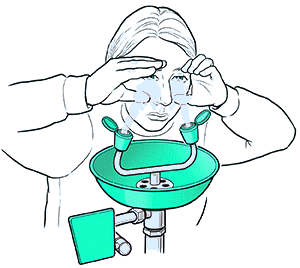
Emergency Showers and Eyewash Stations
Emergency showers and eye wash stations are designed to wash people off in the event of a chemical emergency,such
as when chemicals splash on the skin or into the eyes...